
- info@greathimalayastrek.com
- Kailash Manasarovar Departure Date 2025
 Quick Information
Overviews
The Langtang Valley Trek is an
enchanting journey into the heart of the Langtang region, offering trekkers a
chance to experience both stunning natural beauty and rich cultural heritage.
Located just north of Kathmandu, this trek leads through beautiful oak and
bamboo forests, terraced farmlands, and traditional villages, including
Langtang Village and Mundu. The trail follows the Langtang River deep into the
high valley, surrounded by towering peaks and glaciers.
This trek includes spectacular
viewpoints like Kyanjin Ri (4,300 m/14,108 ft) and Tsergo Ri (4,984 m/16,352
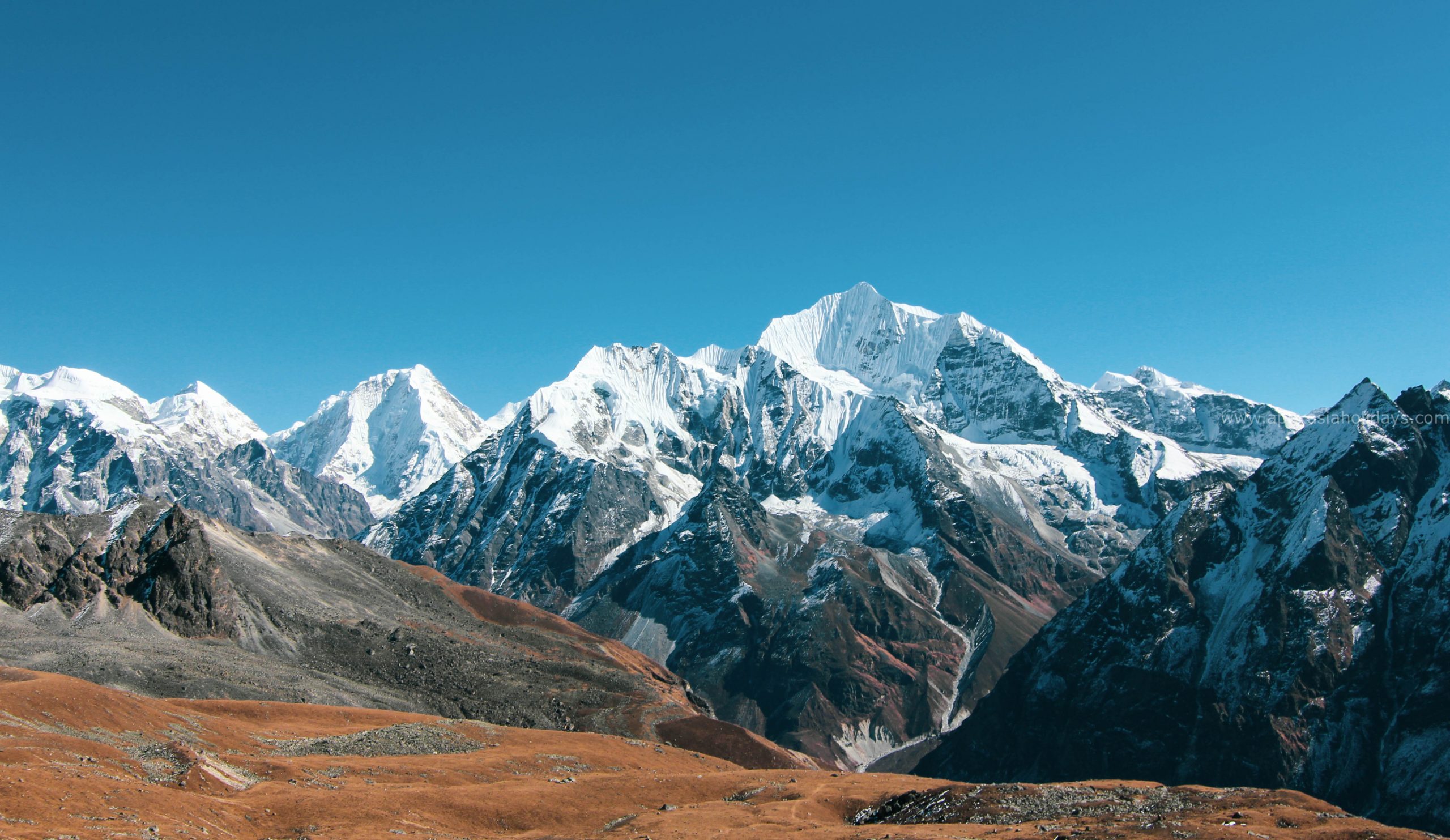
ft), where trekkers are rewarded with panoramic vistas of snow-capped giants
like Langtang Lirung (7,234 m/23,734 ft), Dorje Lyakpa (6,966 m/22,854 ft), Ganchenpo
(6,378 m/20,925 ft), Changbu (6,251 m/20,509 ft), Dhagpache (aka Yansa Tsenji, 6,567
m/21,545 ft), Langsisha Ri (6,412 m/21,037 ft), Ghenye Liru (aka Lirug II,
6,571 m/21,558 ft), etc. The trek culminates at Kyanjin Gumba, an ancient
monastery where you can experience local Tibetan-Buddhist culture.
This trek offers a perfect blend of
moderate adventure and cultural immersion, ideal for those seeking serene
Himalayan landscapes. From peaceful villages to dramatic mountain scenery, the
Langtang Valley Trek is a rewarding escape into the wilderness of Nepal.
The Great Himalaya Trek is a transformative experience that challenges, inspires, and enriches your life in ways you'll never forget.
Here are some of the incredible experiences you'll encounter on the Great Himalaya Trek:
Breathtaking Natural Beauty: Witness the grandeur of snow-capped peaks, glaciers, dense forests, and cascading waterfalls.
Rich Cultural Tapestry: Immerse yourself in the diverse cultures and traditions of the Himalayan communities you'll encounter along the way.
Physical Challenge: Embrace the physical demands of the trek, knowing that each step brings you closer to remarkable views.
Spiritual Journey: Find moments of reflection and inner peace as you journey through the Himalayan landscapes.
Sense of Accomplishment: Reach the end of your trek with a profound sense of achievement and a collection of memories that will stay with you forever.
Key Highlights of the Great Himalaya Trek
Tamang and Tibetan Buddhist Communities: Experience the warm
hospitality of the local Tamang people and immerse yourself in Tibetan Buddhist
culture by visiting ancient monasteries like Kyanjin Gompa. The rich cultural
heritage is evident in the architecture, prayer flags, and spiritual ambiance
of the villages along the trek.
Scenic Vistas: Enjoy breathtaking views of towering Himalayan peaks
such Langtang Lirung (7,234 m/23,734 ft), Dorje Lyakpa (6,966 m/22,854 ft), Ganchenpo
(6,378 m/20,925 ft), Changbu (6,251 m/20,509 ft), Dhagpache (aka Yansa Tsenji, 6,567
m/21,545 ft), Langsisha Ri (6,412 m/21,037 ft), Ghenye Liru (aka Lirug II,
6,571 m/21,558 ft), etc. Witness the stunning beauty of the Lirung Glacier,
adding to the dramatic landscapes that define the Langtang region.
Dramatic Valley Landscapes: Trek through diverse terrain, from
dense forests and terraced farmlands to the wide-open alpine meadows of the
Langtang Valley, surrounded by jagged mountains and glaciers including Lirung
and Yubra Glaciers.
Stunning Viewpoints: Hike to scenic viewpoints like Kyanjin Ri
(4,300 m/14,108 ft) and Tsergo Ri (4,984 m/16,352 ft), offering panoramic
vistas of the Langtang range and beyond, with sweeping views of glaciers and
snow-clad peaks.
Diverse Flora and Fauna: Traverse through the Langtang National
Park, home to an incredible variety of plant and animal life. Spot wildlife
such as red pandas, Himalayan tahr, and musk deer, while walking through lush
rhododendron forests, bamboo groves, and alpine pastures.
Sub-Peaks and Trekking Opportunities
Gokyo Ri (5,357m): A popular sub-peak, Gokyo Ri offers breathtaking views of Everest, Cho Oyu, and Makalu. The Gokyo Lakes are also a highlight of this trek.
Island Peak (6,189m): For those seeking a mountaineering adventure, Island Peak offers an exhilarating climb with stunning Himalayan vistas.
Mera Peak (6,476m): Mera Peak is Nepal's highest trekking peak and offers a challenging yet accessible summit for experienced trekkers.
Three Passes Trek: Embark on the Three Passes Trek, crossing Kongma La, Cho La, and Renjo La, for a thrilling high-altitude adventure with panoramic views.
Pikey Peak (4,065m): Pikey Peak offers mesmerizing sunrise and sunset views of the Everest and Makalu ranges and is perfect for a shorter trek.
Manaslu Circuit Trek: Explore the pristine landscapes and cultural diversity of the Manaslu region, circumnavigating the world's eighth highest peak.
Trek Facts for the Great Himalaya Trek
Duration: The Great Himalaya Trek can vary greatly in duration, ranging from 12 days for shorter treks to over 20 days for more extensive routes.
Highest Point: The highest point on the trek depends on the specific route chosen, but for many treks, it is the viewpoint of Kala Patthar at an altitude of 5,545 meters (18,192 feet).
Difficulty: The Great Himalaya Trek can range from moderate to challenging, depending on the route. Trekkers should be prepared for high altitudes and varying weather conditions.
Start/Finish: The trek can begin and end in various locations, with Lukla or Jiri often serving as starting points for treks to the Everest region.
Permits: Trekkers must obtain necessary permits, including the Sagarmatha National Park Entry Permit, TIMS card, and other region-specific permits.
Accommodation: Tea houses and lodges provide accommodation along the trekking routes, offering a range of amenities from basic to more comfortable.
Best Time to Trek the Great Himalaya
The best time to embark on the Great Himalaya Trek is during the spring (March to May) or autumn (September to November). These seasons offer stable weather conditions, clear skies, and pleasant temperatures, providing ideal trekking conditions.
During the monsoon season (June to August), heavy rainfall can make the trails muddy and slippery, and landslides are a concern. Winter (December to February) brings cold temperatures and snowfall, making some higher-altitude routes challenging.
Trekking in the Great Himalaya: How to Prepare
Physical Fitness: Prioritize physical fitness and stamina by engaging in regular cardio workouts, strength training, and hiking practice. Prepare your legs and lungs for the challenges of high-altitude trekking.
Acclimatization: Allocate time for proper acclimatization by ascending gradually and scheduling rest days at higher altitudes to prevent altitude sickness.
Packing: Pack wisely, focusing on essential clothing for varying weather conditions, sturdy trekking boots, a comprehensive first aid kit, and personal essentials. Keep your backpack organized for easy access.
Hydration and Nutrition: Stay well-hydrated throughout the trek, carry water purification methods, and enjoy nourishing meals at tea houses to maintain energy levels.
Local Guide: Consider hiring a local guide or joining a reputable trekking agency to enhance safety, navigate the trails, and gain cultural insights.
Responsible Trekking: Embrace responsible trekking practices by leaving no trace, minimizing plastic use, and respecting local customs and traditions.
Travel Insurance: Secure comprehensive travel insurance that covers trekking activities, including medical emergencies and evacuations.
Photography and Enjoyment: Capture the stunning landscapes with your camera, but also take moments to savor the natural beauty and immerse yourself in the culture.
Early Start and Pacing: Begin trekking early in the day to make the most of clear skies and avoid harsh weather conditions. Maintain a steady pace to conserve energy.
Rest and Recovery: Listen to your body and take short breaks to rest and recuperate during the trek. Adequate rest prevents overexertion and fatigue.
Group Size: Consider trekking with a small group for a more personalized experience, enhanced safety, and reduced environmental impact.
Emergency Contacts: Carry a list of emergency contacts, including local authorities and your trekking agency's details. Ensure someone is aware of your itinerary.
Cultural Sensitivity: Show respect for local customs and traditions. Seek permission before taking photographs of people and religious sites. Learn basic local phrases to facilitate communication.
Weather Preparedness: Be ready for rapid weather changes in the mountains. Pack waterproof clothing and gear to stay dry during rain or snowfall.
Trekking Permits: Keep your trekking permits and identification documents easily accessible and secure. Authorities may check permits along the trail.
Garbage Disposal: Carry a small trash bag to collect your waste during the trek and dispose of it responsibly at designated points.
Support Local Economy: Purchase locally made products and souvenirs to support the local economy. Avoid buying items made from endangered wildlife or plants.
Best Season for the Great Himalaya Trek
The Great Himalaya Trek is most enjoyable during the spring (March to May) and autumn (September to November). These seasons offer stable weather, clear skies, and pleasant temperatures, providing the best trekking conditions. The trails are also less crowded during these periods, allowing for a more serene experience.
While some treks can be undertaken during the monsoon season (June to August) or winter (December to February), it's important to be prepared for wet conditions and cold temperatures, respectively.
In conclusion, the Great Himalaya Trek offers an extraordinary adventure that combines the wonders of nature, cultural immersion, and personal achievement. It is a journey that transcends physical boundaries, offering profound experiences and cherished memories. Approaching this trek with respect for the environment, local communities, and responsible trekking practices ensures its sustainability and preserves its allure for generations to come. The Great Himalaya Trek is not just an expedition; it is a life-enriching expedition that leaves an indelible mark on your heart and soul, fostering a deep appreciation for the majesty of the Himalayas.
Cost Include
Cost Exclude
Itenerary
Upon your arrival at Tribhuvan International Airport (1,340 m/4,396 ft) in Kathmandu, you will be warmly welcomed by our support team. They will assist you with your luggage and transfer you to your hotel in the heart of the city. Once you check in, take some time to rest and recover from your journey. At the hotel, you will be briefed about your trek and daily activities. If you’re up for it, you can start exploring the lively streets of Thamel, known for its bustling markets, shops, and restaurants. Enjoy a relaxing evening at your hotel, preparing for the exciting days ahead.
After a hearty breakfast at your hotel, embark on a guided sightseeing tour of Kathmandu. Your first stop is Swayambhunath Stupa (Monkey Temple), perched on a hilltop offering panoramic views of the city. Next, visit Pashupatinath Temple, a sacred Hindu site on the banks of the Bagmati River, where you might witness traditional cremation rituals. Afterward, head to Boudhanath Stupa, one of Nepal’s largest and most significant Buddhist stupas, surrounded by monasteries and vibrant Tibetan culture. After lunch at a local restaurant, continue to Patan Durbar Square, renowned for its exquisite Newari architecture and historic temples. Return to your hotel in the evening, where you can relax or explore Thamel further if you wish.
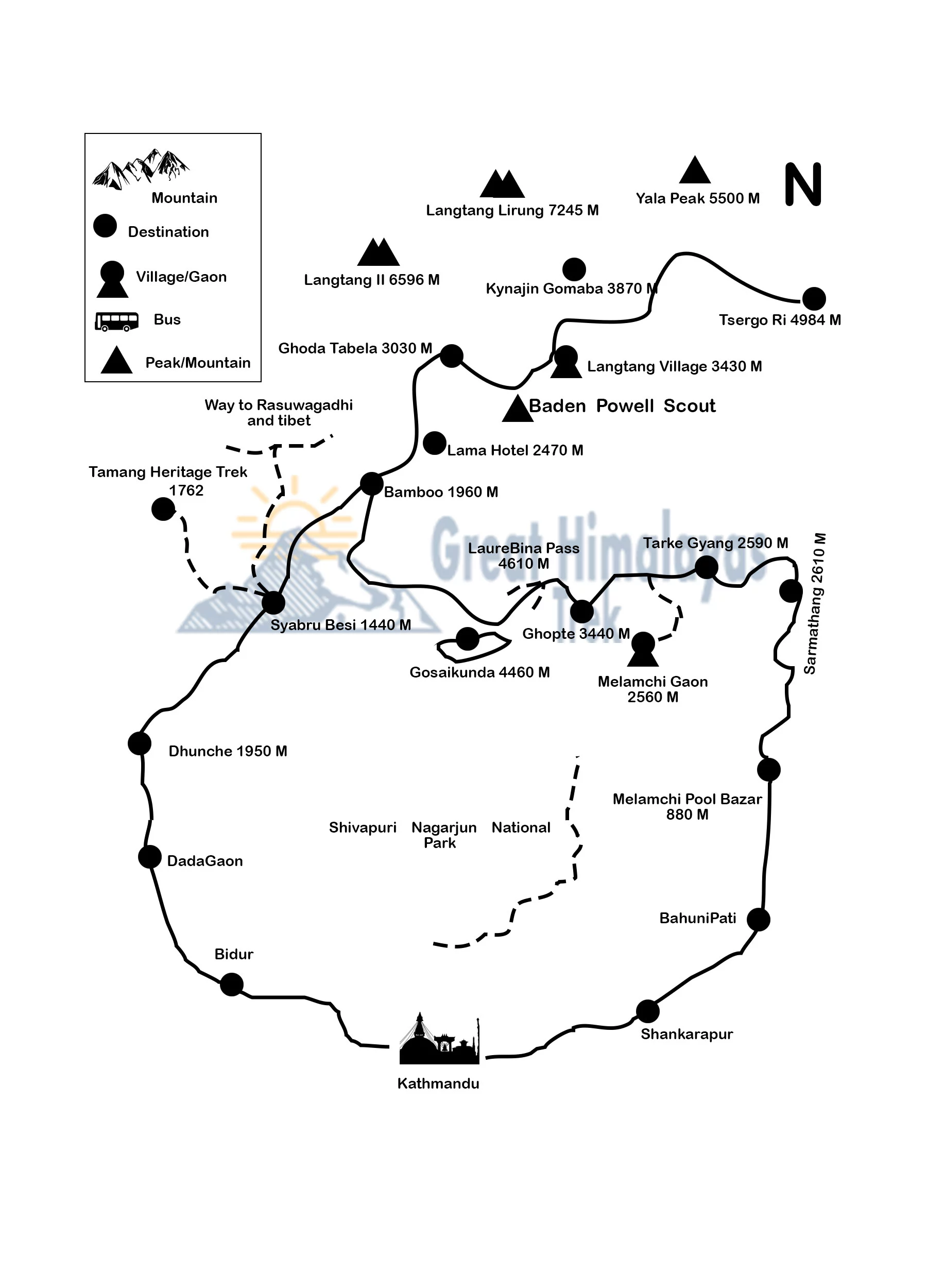
Your journey to the Langtang region begins with an early morning drive from Kathmandu to Shyaphru Besi, the starting point of your trek. As you leave the bustling capital behind, the scenery quickly changes to rural landscapes, with terraced fields and traditional villages dotting the hillsides. The road winds its way through the Trishuli River valley, offering glimpses of local life as you pass through small towns and roadside settlements. The drive is an adventure in itself, with the narrow and winding roads occasionally offering breathtaking views of distant mountains, lush green hills, and deep river gorges. Along the way, you’ll cross rivers, pass through forests, and catch glimpses of the Ganesh Himal range, which rises majestically in the distance. About halfway through the journey, you’ll stop for lunch at a local roadside restaurant, where you can enjoy traditional Nepali cuisine. Ahead of Dhunche, you need to register at Langtang National Park post. Then you reach Dhunche, the administrative center of Rasuwa district and atart descending toward Bhote Koshi River. After 7 to 9 hours of driving, you’ll arrive in Shyaphru Besi, a small, vibrant village perched on the banks of the Bhote Koshi River. The village, with its colorful houses and warm hospitality, is the gateway to the Langtang region. Upon arrival, you can check into a local lodge, rest from the long drive, and prepare for the trekking adventure that awaits you in the coming days.
Today is your first day of trekking. This day is relatively demanding as you ascend more than 1000 meters to reach Lama Hotel, especially with the final 400 m ascent to Rimche. From Shyaphru Besi, you’ll cross a footbridge and follow a series of switchbacks leading to a sprawling community on the east side of the Bhote Khosi Nadi. The trail passes straight through the village. The path then takes on some gentle ups and downs as it follows the Langtang Khola upstream. After about one hour, you’ll reach a charming teahouse called Tingri. Shortly after, a suspension bridge takes you to another side (bank) of Langtang Khola, where you’ll follow the road for a brief stretch before returning to the trail. Then, the trail drops to the river, where a bridge might lead you to some hot springs across the river. However, due to frequent landslides, the springs may not always be accessible. Just past the springs, you reach a spot named Pairo, where two small hotels offer a great spot for a tea break. After a short rest, you’ll continue climbing through dense forest, with opportunities to spot wildlife including white bearded langur monkeys, and a variety of wild birds. The trail winds through riverside clearings with some minor elevation changes, eventually bringing you to Bamboo at 1,970 m, where we’ll stop for lunch. From Bamboo, you’ll climb through forested areas, bypassing landslide zones, though the path occasionally returns to the riverside before crossing a suspension bridge at 2,150 m. Here, a teashop awaits. After navigating a few small landslides, the trail turns into a series of switchbacks, leading you to Rimche (2,455 m/8,054 ft), where you’ll find a cluster of inviting teahouses, a small campsite, and impressive valley views. From Rimche, the trail rises slightly before descending to the village of Lama Hotel at 2,487 m. Upon arrival at Lama Hotel, settle into a cozy tea house, enjoy a warm meal, and relax after your journey.
This day is also demanding as you ascend about 1,000 meters to reach Langtang Village, especially the path that ascends steadily for over 200 meters before Ghodatabela. From Lama Hotel, the trail leads you into enchanting forests filled with oak, birch, hemlock, and mountain bamboo. Spanish moss drapes from the trees, creating a mystical atmosphere. Starting early from the Lama Hotel is ideal if you want the best chance to spot monkeys and the many bird species that feed near the river. Initially, the trail winds through the forest, eventually reaching a teahouse at Riverside (2,670 m/8,760 ft), followed by another at Thomna (Chhunama, 2,890 m/9,482 ft). From Thomna, the path ascends steadily to Ghodatabela (3,030 m/9,941 ft), where you’ll find a few teahouses. Leaving Ghodatabela, you’ll pass an army camp where your permits will be checked. The valley opens up, and the trail becomes less steep. After about an hour, you’ll reach Thyangsyapu (3,120m), where the dense forest gives way to alpine terrain. A short walk brings you to the small settlement of Chyamki (3,110 m/10,203 ft), followed by another one-hour trek to the gompa at Kangtangsa (3,220m). A brief climb further rewards you with sweeping views of the U-shaped, glaciated valley and, in about half an hour, you’ll reach Langtang (3,430 m/11,253 ft), the valley’s administrative center. This community was heavily impacted by the 2015 earthquake but has since rebuilt on both sides of the massive landslide area. Upon arrival in Langtang village, settle into a cozy tea house, enjoy a warm meal, and relax after your journey.
From Langtang, the trail takes you on a gentle climb through the Bhotia hamlets of Mundu and Sindum. Walking, you’ll enjoy breathtaking views of Ganchenpo, Langshisa Ri, and the towering Langtang Lirung to the north. The path then ascends the terminal moraine of the Lirung Glacier before descending toward Kyangjin Gumba (3,870 m/12,697 ft), where you’ll find a collection of teahouses and the gumba itself. Take the opportunity to visit the nearby cheese factory, explore the gumba, or venture up the trails along either side of the Lirung Glacier for a chance to see icefalls and spot wildlife like musk deer or blue sheep.
The easiest viewpoint, Kyanjin Ri (4,300 m/14,108 ft), near Kyanjin Gumba is a hill to the north, marked by many prayer flags that are visible from the village. You can reach this viewpoint by climbing the slopes directly behind Kyanjin Gumba. The summit can be reached in about 2 hours. For those seeking a bigger challenge, the climb to Tsergo Ri (4,984 m/16,352 ft) offers incredible views. The lookout point along the way provides magnificent panoramas of Langtang Lirung and the surrounding peaks. Alternatively, a trek further up the valley toward Langshisa Kharka (4160 m/13,648 ft) is a rewarding trip, offering stunning views of the mountain ranges along the Tibetan border and excellent opportunities for wildlife spotting, especially in the early morning. For more experienced adventurers, Yala Peak (5500 m/18,045 ft), located east of Tsergo Ri, offers an even more spectacular ascent, but it requires mountaineering skills, and equipment.
After spending time in the serene and picturesque Kyanjin Gumba, it’s time to begin the return trek towards Lama Hotel. This day allows you to enjoy the crisp mountain air and peaceful morning ambiance as you retrace your steps through the Langtang Valley. The trail initially descends gently, passing through the beautiful alpine landscape where the towering peaks of Langtang Lirung, Langshisa Ri, and Ganchenpo bid you farewell. As you walk, you’ll cross several glacial streams and traverse rocky paths. Continuing downhill, the path leads you through the familiar hamlets of Mundu and Sindum, where Bhotia culture and mountain life remain vibrant, before reaching Langtang village. The trail gradually descends further from Langtang village (3,430 m/11,253 ft). Then, you’ll reach Ghodatabela. From Ghodatabela, the trail winds down through the forested landscape with the peaceful surroundings of the Langtang Khola flowing beside the trail create a calming atmosphere as you continue toward Lama Hotel. The last stretch is a steady descent into the thick of the forest, bringing you back into the lush green forests of pine, oak, and rhododendron. As you walk through this dense forest, the sounds of birds and rustling leaves will accompany your journey. Keep an eye out for monkeys swinging between trees and, if you’re lucky, you might spot a red panda or musk deer hidden in the foliage. Finally you will reach to Lama Hotel (2,470 m/8,104 ft). Upon arrival in Lama Hotel, settle into a cozy tea house, enjoy a warm meal, and relax after your journey.
As the sun rises over the forested hills surrounding Lama Hotel, you’ll begin your descent towards Syabru Besi, marking the final leg of your Langtang Valley trek. You will trek to Rimche from where the trail takes you back through familiar lush greenery, with towering trees and the sound of the Langtang Khola flowing beside you. The path initially winds through dense forests of oak, rhododendron, and bamboo. Keep your eyes peeled for wildlife—monkeys are often seen swinging between the branches, and you might even spot colorful birds flitting through the trees. After a couple of hours, you’ll reach Bamboo (1970m). From Bamboo, the trail continues toward Pairo. As you trek further, the trail becomes gentler, and soon you will approach the extended village of Shyaphru Besi (1,460 m/4,790 ft). Upon arrival in Shyaphru Besi, settle into a cozy tea house, enjoy a warm meal, and relax after your journey.
After completing your Langtang Valley trek, the journey back to Kathmandu begins with an early morning drive from Shyaphru Besi. As you leave the quiet mountain village behind, the road winds along the Bhote Koshi River, offering stunning views of the surrounding hills and valleys. You will ascend toward Dhunche, the administrative center of Rasuwa District. This small town, perched on a hillside, offers a chance to view of the Ganesh Himal range before continuing the drive. The road through Dhunche is narrow and rugged, but the surrounding landscapes—lush forests, deep valleys, and terraced fields—create a scenic and peaceful atmosphere. As you descend further, the landscape begins to change, with the forests giving way to more open farmland and scattered villages. You’ll pass through Trisuli located on the banks of the Trishuli River. The Trishuli River itself is known for its white-water rapids. The journey continues along the winding road that follows the Trishuli River, with occasional views of the Ganesh Himal and green hills in the distance. The road gradually becomes smoother as you approach the Kathmandu Valley, and the rural scenery slowly gives way to the busy streets and vibrant life of the capital. After 7 to 9 hours of driving, you’ll arrive back in Kathmandu, where you can check into your hotel.
Our team will accompany you to the airport for your journey back home. If you wish to extend your stay, there are plenty of exciting options like jungle safaris, white-water rafting, a tour of Tibet (Mount Kailash), or even mountain biking adventures. Feel free to ask us for details!
Route Map
 Gallery And Videos
Frequently Asked Question
Group Join Discount
| Nos Of Persons | price per person |
|---|
Upcoming Fixed Departure
| Trip Name | Departure Date | Price | Trip Status | Action |
|---|
UpComming Fixed Departure
Package Reviews And Rating
Write Reviews
Enquiry For Further Information

showing varified reviews