
- info@greathimalayastrek.com
- Kailash Manasarovar Departure Date 2025
 Quick Information
Overviews
The Langtang Valley and Gosain Kund
Trek is a dynamic 16-day journey that takes you through three of Nepal’s most
captivating regions: the Langtang Valley, Gosain Kund, and Helambu. This trek
combines stunning natural landscapes, rich cultural heritage, and exhilarating
adventure, offering an unforgettable experience for trekkers seeking both
challenge and beauty.
Starting with the Langtang Valley,
the trek leads you through verdant forests of rhododendron and bamboo, across
glacial rivers, and into the heart of the Langtang Region. Here, you will
explore traditional villages such as Langtang and Kyanjin Gumba. You’ll witness
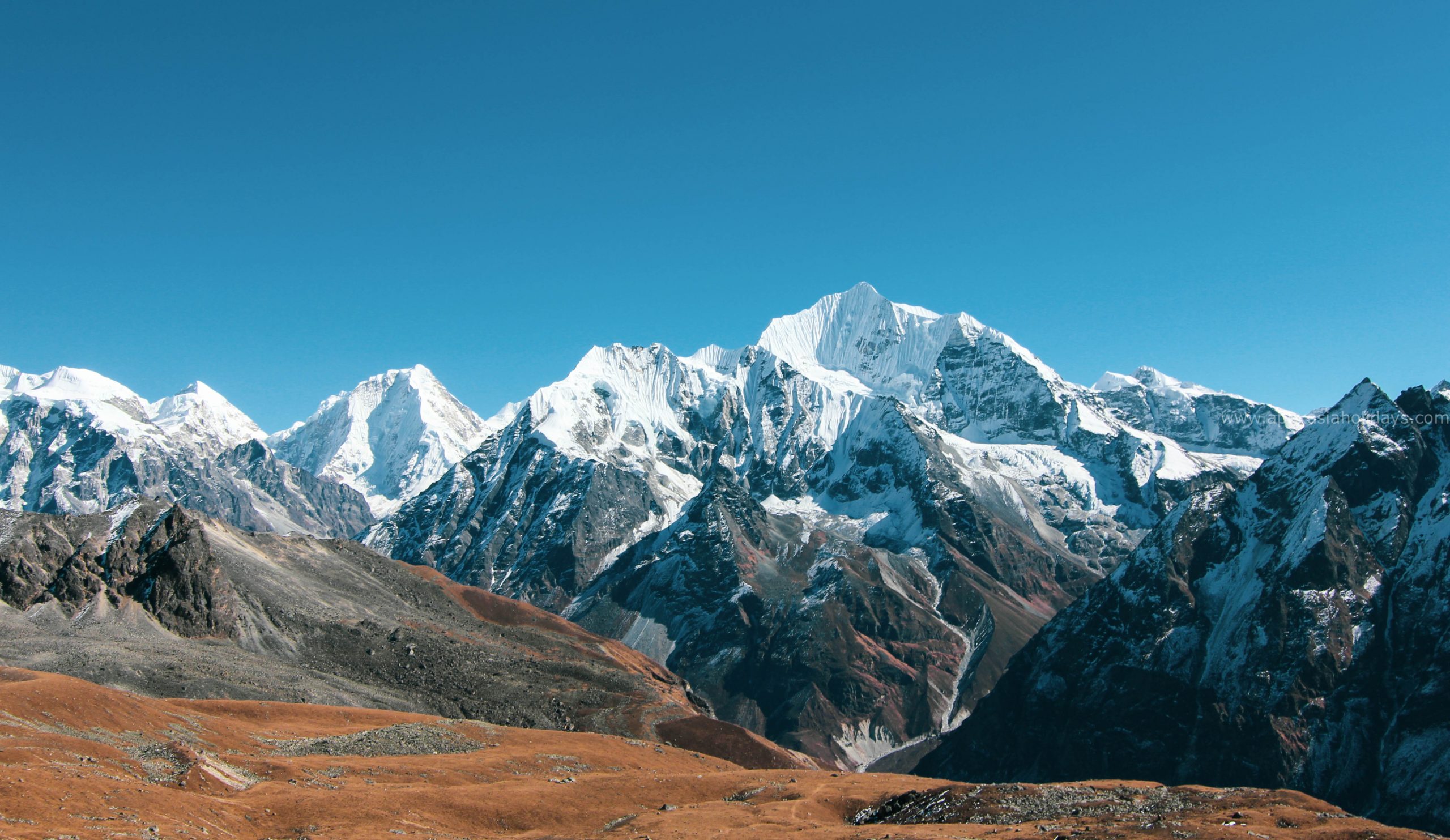
breathtaking views of snow-capped peaks from spectacular viewpoints like
Kyanjin Ri (4,300 m/14,108 ft) and Tsergo Ri (4,984 m/16,352 ft), where
trekkers are rewarded with panoramic vistas of snow-capped giants like Langtang
Lirung (7,234 m/23,734 ft), Dorje Lyakpa (6,966 m/22,854 ft), Ganchenpo (6,378 m/20,925
ft), Changbu (6,251 m/20,509 ft), Dhagpache (aka Yansa Tsenji, 6,567 m/21,545
ft), Langsisha Ri (6,412 m/21,037 ft), Ghenye Liru (aka Lirug II, 6,571
m/21,558 ft), etc. The adventure continues as you ascend towards the sacred
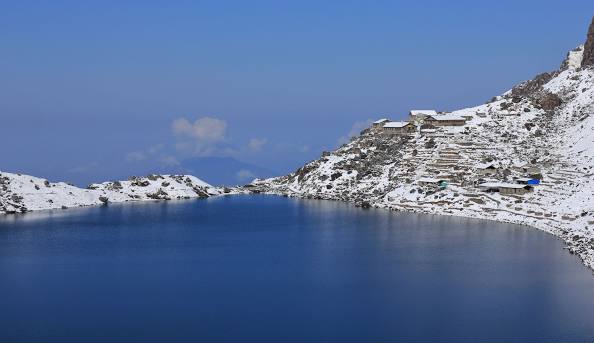
Gosain Kund Lake, a spiritual high-altitude lake revered by both Hindus and
Buddhists. Along the way, you’ll pass through the challenging yet rewarding
Lauribina Pass, where sweeping panoramic views of the Langtang, Ganesh Himal,
and Manaslu ranges will leave you in awe. Gosain Kund, with its pristine waters
surrounded by rugged mountains, is believed to have been created by Lord Shiva
according to Hindu mythology.
After soaking in the tranquility of
Gosainkund, the trail descends into the lush and remote Helambu Region. This
area is known for its peaceful villages inhabited by Sherpas, Tamangs, and
Hyolmo people, offering an intimate glimpse into their traditional lifestyle.
Walking through pine, oak, and rhododendron forests, you will pass through
charming settlements such as Kutumsang and Chisapani, enjoying both nature and
cultural immersion.
This trek offers an incredible variety of landscapes—from high mountains, passes and alpine lakes to dense forests and terraced fields—and a profound connection to the cultures of the Tamang, Sherpa, and Hyolmo communities. Whether you seek nature’s beauty, cultural exploration, or high-altitude adventure, the Langtang Valley and Gosainkund Trek promises a journey filled with awe and discovery.
Trek Highlights:
1. Tamang and Tibetan Buddhist Communities: Experience the warm
hospitality of the local Tamang people and immerse yourself in Tibetan Buddhist
culture by visiting ancient monasteries like Kyanjin Gompa. The rich cultural
heritage is evident in the architecture, prayer flags, and spiritual ambiance
of the villages along the trek. Trek the Helambu region through peaceful
Sherpa, Tamang, and Hyolmo villages, surrounded by rolling hills and terraced
farmlands.
2. Dramatic Valley Landscapes: Trek through diverse terrain, from
dense forests and terraced farmlands to the wide-open alpine meadows of the
Langtang Valley, surrounded by jagged mountains and glaciers including Lirung
and Yubra Glaciers.
3. Stunning Viewpoints: Hike to scenic viewpoints like Kyanjin Ri
(4,300 m/14,108 ft) and Tsergo Ri (4,984 m/16,352 ft), views of towering
Himalayan peaks such as Langtang Lirung (7,234 m/23,734 ft), Dorje Lyakpa (6,966
m/22,854 ft), Ganchenpo (6,378 m/20,925 ft), Changbu (6,251 m/20,509 ft), Dhagpache
(aka Yansa Tsenji, 6,567 m/21,545 ft), Langsisha Ri (6,412 m/21,037 ft), Ghenye
Liru (aka Lirug II, 6,571 m/21,558 ft), etc. and beyond, with sweeping views of
glaciers and snow-clad peaks.
4. Sacred Gosain Kund Lake: A serene, alpine lake at 4,380 meters (14,370
feet), revered by Hindus and Buddhists, with a Shiva shrine beside its
crystal-clear waters.
5. Lauribina Pass: A challenging yet rewarding ascent to 4,610 meters (15,125 feet), offering sweeping views of the Langtang, Ganesh Himal, and Jugal Himal rangesDiverse Flora and
Cost Include
Cost Exclude
Itenerary
Upon your arrival at Tribhuvan International Airport (1,340 m/4,396 ft) in Kathmandu, you will be warmly welcomed by our support team. They will assist you with your luggage and transfer you to your hotel in the heart of the city. Once you check in, take some time to rest and recover from your journey. At the hotel, you will be briefed about your trek and daily activities. If you’re up for it, you can start exploring the lively streets of Thamel, known for its bustling markets, shops, and restaurants. Enjoy a relaxing evening at your hotel, preparing for the exciting days ahead.
After a hearty breakfast at your hotel, embark on a guided sightseeing tour of Kathmandu. Your first stop is Swayambhunath Stupa (Monkey Temple), perched on a hilltop offering panoramic views of the city. Next, visit Pashupatinath Temple, a sacred Hindu site on the banks of the Bagmati River, where you might witness traditional cremation rituals. Afterward, head to Boudhanath Stupa, one of Nepal’s largest and most significant Buddhist stupas, surrounded by monasteries and vibrant Tibetan culture. After lunch at a local restaurant, continue to Patan Durbar Square, renowned for its exquisite Newari architecture and historic temples. Return to your hotel in the evening, where you can relax or explore Thamel further if you wish.
Your journey to the Langtang region begins with an early morning drive from Kathmandu to Shyaphru Besi, the starting point of your trek. As you leave the bustling capital behind, the scenery quickly changes to rural landscapes, with terraced fields and traditional villages dotting the hillsides. The road winds its way through the Trishuli River valley, offering glimpses of local life as you pass through small towns and roadside settlements. The drive is an adventure in itself, with the narrow and winding roads occasionally offering breathtaking views of distant mountains, lush green hills, and deep river gorges. Along the way, you’ll cross rivers, pass through forests, and catch glimpses of the Ganesh Himal range, which rises majestically in the distance. About halfway through the journey, you’ll stop for lunch at a local roadside restaurant, where you can enjoy traditional Nepali cuisine. Ahead of Dhunche, you need to register at Langtang National Park post. Then you reach Dhunche, the administrative center of Rasuwa district and atart descending toward Bhote Koshi River. After 7 to 9 hours of driving, you’ll arrive in Shyaphru Besi, a small, vibrant village perched on the banks of the Bhote Koshi River. The village, with its colorful houses and warm hospitality, is the gateway to the Langtang region. Upon arrival, you can check into a local lodge, rest from the long drive, and prepare for the trekking adventure that awaits you in the coming days.
Today is your first day of trekking. This day is relatively demanding as you ascend more than 1000 meters to reach Lama Hotel, especially with the final 400 m ascent to Rimche. From Shyaphru Besi, you’ll cross a footbridge and follow a series of switchbacks leading to a sprawling community on the east side of the Bhote Khosi Nadi. The trail passes straight through the village. The path then takes on some gentle ups and downs as it follows the Langtang Khola upstream. After about one hour, you’ll reach a charming teahouse called Tingri. Shortly after, a suspension bridge takes you to another side (bank) of Langtang Khola, where you’ll follow the road for a brief stretch before returning to the trail. Then, the trail drops to the river, where a bridge might lead you to some hot springs across the river. However, due to frequent landslides, the springs may not always be accessible. Just past the springs, you reach a spot named Pairo, where two small hotels offer a great spot for a tea break. After a short rest, you’ll continue climbing through dense forest, with opportunities to spot wildlife including white bearded langur monkeys, and a variety of wild birds. The trail winds through riverside clearings with some minor elevation changes, eventually bringing you to Bamboo at 1,970 m, where we’ll stop for lunch. From Bamboo, you’ll climb through forested areas, bypassing landslide zones, though the path occasionally returns to the riverside before crossing a suspension bridge at 2,150 m. Here, a teashop awaits. After navigating a few small landslides, the trail turns into a series of switchbacks, leading you to Rimche (2,455 m/8,054 ft), where you’ll find a cluster of inviting teahouses, a small campsite, and impressive valley views. From Rimche, the trail rises slightly before descending to the village of Lama Hotel at 2,487 m. Upon arrival at Lama Hotel, settle into a cozy tea house, enjoy a warm meal, and relax after your journey.
This day is also demanding as you ascend about 1,000 meters to reach Langtang Village, especially the path that ascends steadily for over 200 meters before Ghodatabela. From Lama Hotel, the trail leads you into enchanting forests filled with oak, birch, hemlock, and mountain bamboo. Spanish moss drapes from the trees, creating a mystical atmosphere. Starting early from the Lama Hotel is ideal if you want the best chance to spot monkeys and the many bird species that feed near the river. Initially, the trail winds through the forest, eventually reaching a teahouse at Riverside (2,670 m/8,760 ft), followed by another at Thomna (Chhunama, 2,890 m/9,482 ft). From Thomna, the path ascends steadily to Ghodatabela (3,030 m/9,941 ft), where you’ll find a few teahouses. Leaving Ghodatabela, you’ll pass an army camp where your permits will be checked. The valley opens up, and the trail becomes less steep. After about an hour, you’ll reach Thyangsyapu (3,120m), where the dense forest gives way to alpine terrain. A short walk brings you to the small settlement of Chyamki (3,110 m/10,203 ft), followed by another one-hour trek to the gompa at Kangtangsa (3,220m). A brief climb further rewards you with sweeping views of the U-shaped, glaciated valley and, in about half an hour, you’ll reach Langtang (3,430 m/11,253 ft), the valley’s administrative center. This community was heavily impacted by the 2015 earthquake but has since rebuilt on both sides of the massive landslide area. Upon arrival in Langtang village, settle into a cozy tea house, enjoy a warm meal, and relax after your journey.
From Langtang, the trail takes you on a gentle climb through the Bhotia hamlets of Mundu and Sindum. Walking, you’ll enjoy breathtaking views of Ganchenpo, Langshisa Ri, and the towering Langtang Lirung to the north. The path then ascends the terminal moraine of the Lirung Glacier before descending toward Kyangjin Gumba (3,870 m/12,697 ft), where you’ll find a collection of teahouses and the gumba itself. Take the opportunity to visit the nearby cheese factory, explore the gumba, or venture up the trails along either side of the Lirung Glacier for a chance to see icefalls and spot wildlife like musk deer or blue sheep.
The easiest viewpoint, Kyanjin Ri (4,300 m/14,108 ft), near Kyanjin Gumba is a hill to the north, marked by many prayer flags that are visible from the village. You can reach this viewpoint by climbing the slopes directly behind Kyanjin Gumba. The summit can be reached in about 2 hours. For those seeking a bigger challenge, the climb to Tsergo Ri (4,984 m/16,352 ft) offers incredible views. The lookout point along the way provides magnificent panoramas of Langtang Lirung and the surrounding peaks. Alternatively, a trek further up the valley toward Langshisa Kharka (4160 m/13,648 ft) is a rewarding trip, offering stunning views of the mountain ranges along the Tibetan border and excellent opportunities for wildlife spotting, especially in the early morning. For more experienced adventurers, Yala Peak (5500 m/18,045 ft), located east of Tsergo Ri, offers an even more spectacular ascent, but it requires mountaineering skills, and equipment.
After spending time in the serene and picturesque Kyanjin Gumba, it’s time to begin the return trek towards Lama Hotel. This day allows you to enjoy the crisp mountain air and peaceful morning ambiance as you retrace your steps through the Langtang Valley. The trail initially descends gently, passing through the beautiful alpine landscape where the towering peaks of Langtang Lirung, Langshisa Ri, and Ganchenpo bid you farewell. As you walk, you’ll cross several glacial streams and traverse rocky paths. Continuing downhill, the path leads you through the familiar hamlets of Mundu and Sindum, where Bhotia culture and mountain life remain vibrant, before reaching Langtang village. The trail gradually descends further from Langtang village (3,430 m/11,253 ft). Then, you’ll reach Ghodatabela. From Ghodatabela, the trail winds down through the forested landscape with the peaceful surroundings of the Langtang Khola flowing beside the trail create a calming atmosphere as you continue toward Lama Hotel. The last stretch is a steady descent into the thick of the forest, bringing you back into the lush green forests of pine, oak, and rhododendron. As you walk through this dense forest, the sounds of birds and rustling leaves will accompany your journey. Keep an eye out for monkeys swinging between trees and, if you’re lucky, you might spot a red panda or musk deer hidden in the foliage. Finally, you will reach Lama Hotel (2,470 m/8,104 ft). Upon arrival at Lama Hotel, settle into a cozy tea house, enjoy a warm meal, and relax after your journey.
As the sun rises over the forested hills surrounding Lama Hotel, you’ll begin your descent towards Syabru Besi, marking the final leg of your Langtang Valley trek. You will trek to Rimche from where the trail takes you back through familiar lush greenery, with towering trees and the sound of the Langtang Khola flowing beside you. The path initially winds through dense forests of oak, rhododendron, and bamboo. Keep your eyes peeled for wildlife—monkeys are often seen swinging between the branches, and you might even spot colorful birds flitting through the trees. After a couple of hours, you’ll reach Bamboo. From Bamboo, the trail continues toward Pairo. As you cross the river, you’ll begin your ascent along picturesque trails leading to Thulo Syabru (2,250 m/7,382 ft). This serene journey offers captivating glimpses of nature’s beauty, dotted with charming Tamang villages that reflect the rich culture of the region. The trail is further enhanced by breathtaking vistas of the majestic Ganesh Himal range, creating a stunning backdrop that makes your trek to Thulo Shyaphru truly unforgettable.
As you bid farewell to Thulo Syabru, your trek begins its ascent into the higher altitudes. The trail meanders through the vibrant villages of Foprang Danda and Durdagang, surrounded by stunning hemlock, rhododendron, and oak forests. Along the way, breathtaking views of snow-capped peaks like Ganesh Himal and Langtang will accompany you, creating a picturesque journey toward the serene Buddhist monastery of Sing Gumba (3,150 me/10,335 ft). If you’re eager for a taste of local flavor, be sure to visit the cheese factory here for some fresh cheese.
Today’s journey on the trek leads you to the sacred and tranquil Gosai Kund Lake. Continuing your climb from Shin Gumba will lead you to Cholangpati. From Cholangpati, you’ll ascend higher into the rugged wilderness, navigating rocky terrain that serves as a sanctuary for the endangered Red Panda. The trail features challenging steep ascents that test your endurance, but the breathtaking views of snow-capped peaks like Ganesh, Manaslu, and Langtang more than compensate for the effort. A stop at Lauribina offers a chance to rest your legs while soaking in stunning Himalayan vistas. From Lauribina, the path continues through charming streams and lush pasturelands, guiding you to the sacred Gosai Kund Lake (4,380 m/14,370 ft), a site of deep significance for both Hindu and Buddhist devotees. According to legend, this lake was formed by Lord Shiva’s trident to quench his thirst. At Gosain Kund, there is a Shiva shrine adorned with bells near the lake to ward off demons. In addition to Gosai Kund Lake, the region boasts several other lakes, including Amar Kunda, Saraswati Kunda, Dudh Kunda, and Bhairav Kunda. The stunning scenery of Gosaikunda and its surrounding lakes, framed by majestic snow-capped mountains, creates a truly heavenly experience. If time permits, you can hike up the rocky hillsides to the north for breathtaking views of Surya Peak and the surrounding lakes.
Today marks an exciting milestone as you cross the Laurebina Pass! Known for being one of the more accessible passes in Nepal, the ascent is gentle and rewarding. You’ll bid farewell to the sacred shores of Gosaikunda Lake and begin your journey back to Ghopte. Departing from Gosaikunda, you’ll follow a winding trail alongside Gosaikunda Lake, gradually making our way to the base of the pass. The trail first leads you past three serene lakes before tackling ascent toward the rugged Lauribina Pass. Finally, you’ll reach Surya Kund, perched atop the Suryakunda Pass, commonly referred to as Laurebina La (Pass) (4,610 m/15,125 ft). Once at the top, prepare to be awestruck by the breathtaking mountain vistas that unfold before you including Langtang, Ganesh Himal, and Jugal ranges. After taking in these stunning vistas, the trail plunges steeply downward to Phedi, where we will pause for lunch. From there, the path weaves through rolling meadows, with a mix of ascents and descents, eventually leading you to the village of Ghopte (3,430 m/11,253 ft).
Today, you’ll step into the stunning Helambu region, where the trail winds through enchanting forests of pine and vibrant rhododendrons. As you navigate the rocky paths, you’ll make your way to Thadepati, where a steep ascent leads you to the Thadepati Pass. Along the way, the breathtaking views of Shisha Pangma and Dorje Lyakpa mountains will accompany you to Mangengoth. This spot holds spiritual significance for the local Tamang community, with prayer flags fluttering gently in the breeze, inviting you to pause and connect with the tranquil energy that fills the air. Continuing along the trail, you’ll soon arrive in Kutumsang, a charming village that beautifully captures the rustic essence of the Langtang region.
From Kutumsang, you’ll follow a community trail that meanders through remote villages inhabited by Sherpas, Tamang, and Hyolmos. As you walk along the hillside, you’ll be surrounded by lush forests and stunning scenery, gradually descending to Pati Bhanjyang. Here, the trail winds through dense woodlands. Along the way, you’ll be treated to an abundance of natural beauty, with stunning views of green hills and lush forests. The trail leads you through several local settlements, featuring a mix of ascents and descents as you make your way to Chisapani. The name “Chisapani” translates to “cold water,” so be prepared for cooler temperatures upon arrival.
Your journey begins as you leave Chisapani, with the trail winding through meadows and cultivated fields. You’ll ascend through vibrant oak and rhododendron forests, reaching Borlang Bhanjyang (2,430 m/7,972 ft). Here, take a moment to soak in the stunning panoramic views stretching from Annapurna in the west to Ganesh Himal and Numbur in the east. This ridge serves as the northern rim of the Kathmandu Valley. As you continue, you’ll enter Shivapuri Nagarjun National Park, where the trail meanders through lush landscapes, climbing hills and descending towards Mulkharka (1,855 m/6,086 ft). From this vantage point, you’ll catch your first glimpse of Kathmandu in the distance. The descent from Mulkharka leads you down a series of steps, finally reaching Sundarijal (1,460 m/4,790 ft). Here, you’ll enjoy a short drive of about an hour back to Kathmandu, concluding your unforgettable trek.
Our team will accompany you to the airport for your journey back home. If you wish to extend your stay, there are plenty of exciting options like jungle safaris, white-water rafting, a tour of Tibet (Mount Kailash), or even mountain biking adventures. Feel free to ask us for details!
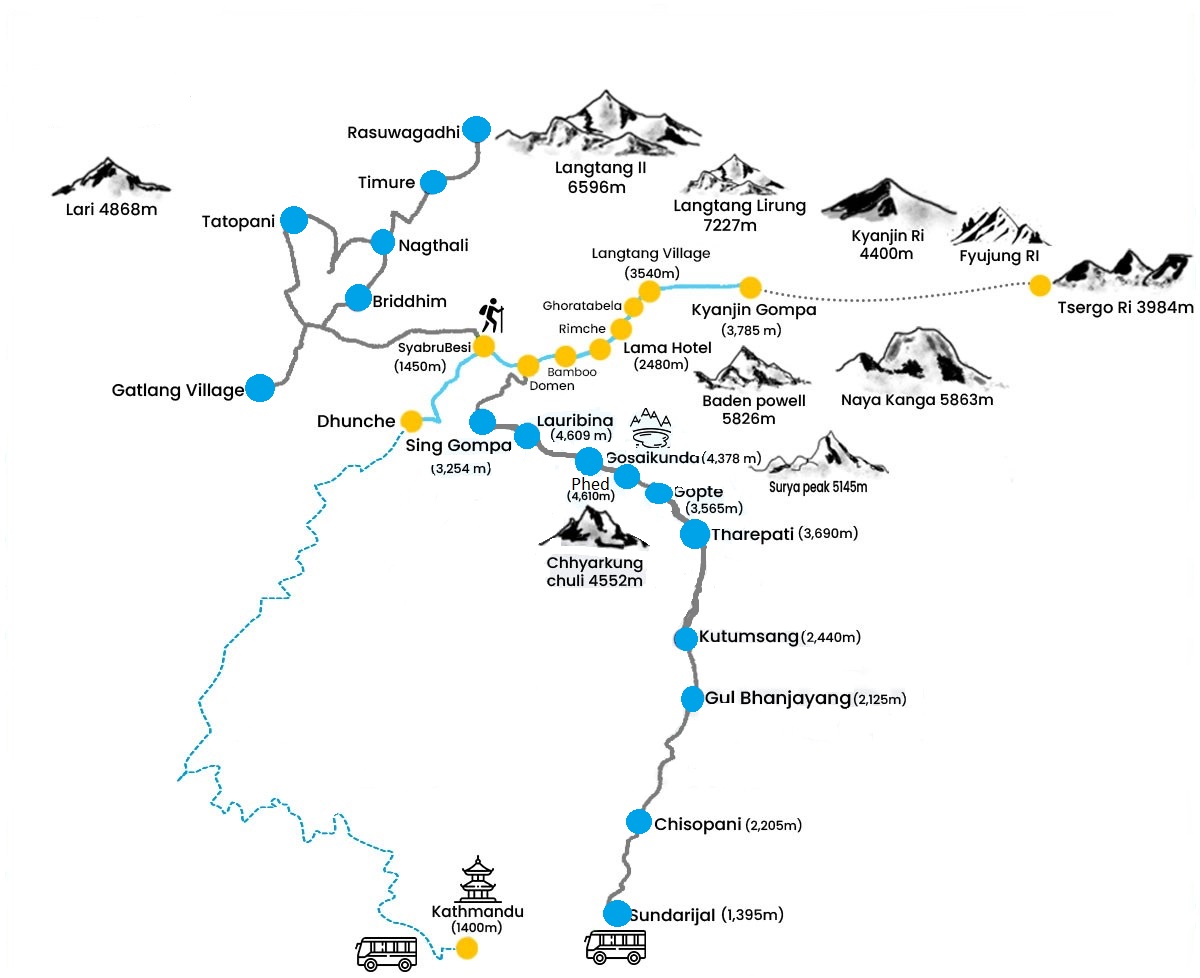
Route Map
 Gallery And Videos
Frequently Asked Question
Group Join Discount
| Nos Of Persons | price per person |
|---|
Upcoming Fixed Departure
| Trip Name | Departure Date | Price | Trip Status | Action |
|---|
UpComming Fixed Departure
Package Reviews And Rating
Write Reviews
Enquiry For Further Information

showing varified reviews