
- info@greathimalayastrek.com
- Kailash Manasarovar Departure Date 2025
 Quick Information
Overviews
The Upper Mustang trek offers a
rare glimpse into a hidden and ancient Tibetan kingdom within Nepal. Set in the
breathtaking landscapes of Mustang, this trek takes you through one of the most
remote and culturally rich regions of the Himalayas. Known as the “center of
the sky” and “the head of all rivers,” Mustang’s dramatic geography is marked
by towering cliffs, sculpted canyons, and vibrant rock formations. Traditional
Tibetan-style villages, crumbling fortresses, and unexplored caves await as you
journey through this mystical region, where the ancient Bon religion predates
Buddhism and Tibetan Buddhist traditions thrive.
Upper Mustang, lying in the rain
shadow of the Dhaulagiri range, boasts a unique blend of stark desert beauty
and rich cultural heritage. The trek takes you to the walled city of Lo
Manthang, the heart of the kingdom, where ancient monasteries and royal palaces
still stand. Highlights include the sky caves of Luri Gompa and Tashi Kabum,
famous for their intricate murals dating back centuries. Along the way, you’ll
encounter villages like Ghara, Yara, and Tangge, where you can immerse yourself
in the local culture. Further, you’ll visit Muktinath temple, one of the most
sacred sites of Nepal.
For those seeking an extra layer of
adventure, visiting during the colorful Tiji Festival in May provides a chance
to witness traditional Tibetan Buddhist rituals and lama dances. The trek can
be customized with boutique lodges, extended stays, and special excursions,
making it a journey tailored to your interests.
Starting Your Journey:
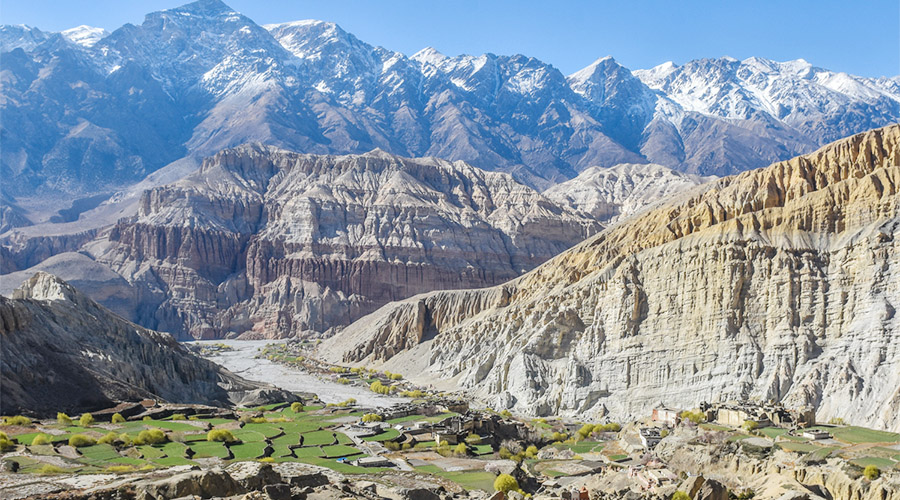
Your trek begins in the town of Jomsom, where you can either take a scenic flight or embark on a picturesque drive to the trailhead. From there, the trail follows the Kali Gandaki River, leading you into the heart of Upper Mustang. Along the way, you'll traverse lush valleys, arid desert-like terrains, and encounter breathtaking geological formations like wind-carved cliffs and vibrant rock formations. The region's iconic red and ochre cliffs against the deep blue skies create a visual spectacle.
Cultural Richness:
One of the most captivating aspects of the Upper Mustang Trek is its cultural richness. This region was once a vital trade route between Tibet and India, resulting in a fusion of Tibetan Buddhism and indigenous traditions. You'll have the chance to explore ancient monasteries, fortified settlements, and traditional villages that have remained untouched by modernity for centuries. The walled city of Lo Manthang, with its intricately designed mud-brick buildings and royal palace, stands as a testament to the area's historical significance.
Interacting with Locals:
The trek also offers the opportunity to interact with the warm and welcoming local communities. Villagers along the route maintain their traditional lifestyles, and witnessing their daily activities, from farming to yak herding, provides a glimpse into the challenges and beauty of life in this remote region.
Adventure and Natural Beauty:
The Upper Mustang Trek combines stunning natural beauty with a deep cultural immersion. The journey through this "forbidden kingdom" promises trekkers a once-in-a-lifetime experience, where they can traverse ancient trails, uncover hidden monastic treasures, and engage with a way of life that has remained unchanged for generations. It's a perfect blend of adventure, culture, and breathtaking landscapes, making it an ideal choice for those seeking an off-the-beaten-path trekking experience in Nepal.
Additional Highlights
Lo Manthang: Explore the ancient walled city, home to royal
palaces, monasteries, and Tibetan Buddhist culture.
Sky Caves: Discover the hidden, ancient caves of Luri Gumba and
Tashi Kabum, featuring intricate Tibetan Buddhist murals.
Lo Gekar Gumba: One of the oldest monasteries in Upper Mustang
considered to have been constructed before Samye Gumba, is a sacred site known
for its beautiful architecture, rich murals, and significant role in preserving
Tibetan Buddhism.
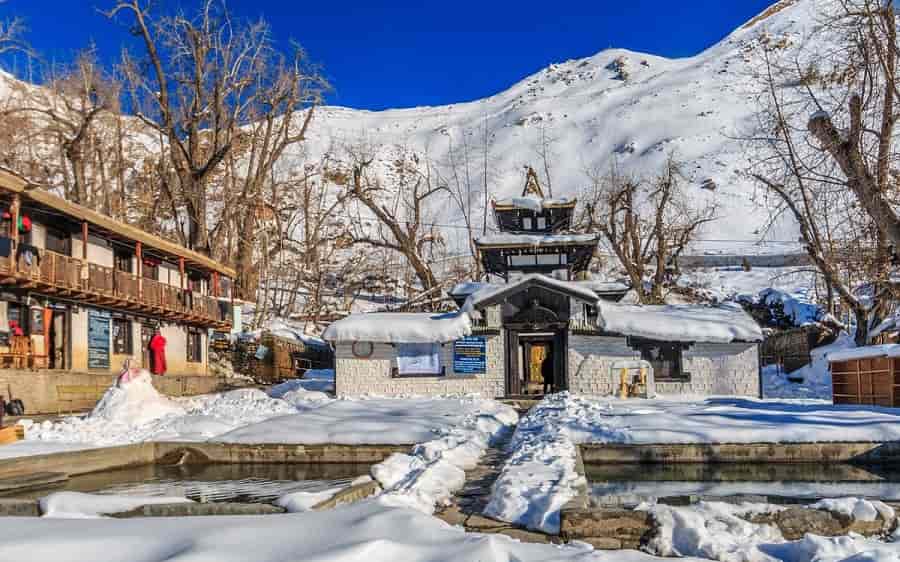
Muktinath: A revered pilgrimage site, Muktinath is significant for
both Hindus and Buddhists, featuring 108 sacred water spouts and temples that
symbolize the quest for spiritual enlightenment amid the stunning backdrop of
the Annapurna and Dhaulagiri ranges.
Scenic Landscapes: Trek through spectacular canyons, colorful rock
formations, and the dramatic Kali Gandaki Gorge, set against the backdrop of
snow-capped peaks.
Diverse Religion and Cultural Immersion: Encounter a blend of
Tibetan Buddhism and the ancient Bon religion, offering a glimpse into Mustang,s
spiritual traditions and experiencing authentic Mustangi culture in remote
villages like Ghara, Yara, and Tangge, interacting with locals and nomads.
In Conclusion
The Upper Mustang Trek stands as a remarkable and unparalleled adventure that beckons adventurers and cultural enthusiasts alike to explore the hidden treasures of Nepal's Himalayas. This expedition is not merely a trek; it is a transformative journey that weaves together the threads of breathtaking natural beauty, rich cultural heritage, and a profound sense of exploration.
The allure of the Upper Mustang Trek lies not only in its scenic grandeur but also in its cultural depth. As you traverse the arid terrains and traverse centuries-old trails, you'll have the privilege of engaging with local communities whose traditions have remained unaltered for generations. The juxtaposition of their traditional way of life against the backdrop of ancient monasteries and mud-brick villages creates a tapestry of experiences that leaves an indelible mark on your soul.
Moreover, the Upper Mustang Trek offers a sense of accomplishment that few adventures can rival. Conquering challenging passes and navigating the remote and rugged terrain provides a profound sense of achievement. This trek isn't just about reaching the destination; it's about embracing the journey, relishing the moments of cultural immersion, and cherishing the memories that will endure for a lifetime.
In essence, the Upper Mustang Trek is an odyssey through a hidden kingdom, a sanctuary where nature's beauty and human history converge. It's an expedition that transcends the ordinary, promising trekkers an unforgettable blend of adventure, culture, and exploration—a journey that will forever hold a special place in the hearts of those who undertake it. For those seeking an off-the-beaten-path adventure that leaves an indelible mark, the Upper Mustang Trek beckons as an experience of a lifetime.
Cost Include
Cost Exclude
Itenerary
Upon your arrival at Tribhuvan International Airport (1,340 m/4,396 ft) in Kathmandu, you will be warmly welcomed by our support team. They will assist you with your luggage and transfer you to your hotel in the heart of the city. Once you check in, take some time to rest and recover from your journey. At the hotel, you will be briefed about your trek and daily activities. If you’re up for it, you can start exploring the lively streets of Thamel, known for its bustling markets, shops, and restaurants. Enjoy a relaxing evening at your hotel, preparing for the exciting days ahead.
After a hearty breakfast at your hotel, embark on a guided sightseeing tour of Kathmandu. Your first stop is Swayambhunath Stupa (Monkey Temple), perched on a hilltop offering panoramic views of the city. Next, visit Pashupatinath Temple, a sacred Hindu site on the banks of the Bagmati River, where you might witness traditional cremation rituals. Afterward, head to Boudhanath Stupa, one of Nepal’s largest and most significant Buddhist stupas, surrounded by monasteries and vibrant Tibetan culture. After lunch at a local restaurant, continue to Patan Durbar Square, renowned for its exquisite Newari architecture and historic temples. Return to your hotel in the evening, where you can relax or explore Thamel further if you wish.
The drive from Kathmandu to Pokhara is a journey through Nepal’s natural beauty. Leaving behind the busy streets of Kathmandu, the road climbs gently through green hills and terraced farmlands. As you descend from Nagdhunga, panoramic views open up, and on clear days, distant snow-capped mountain ranges shimmer on the horizon. The highway winds along the Trishuli River, passing shaded forests, deep valleys, and cascading waterfalls. Near Mugling, the landscape softens as the Trishuli and Marshyangdi rivers meet. Crossing the Trishuli River, the road follows the Marshyangdi, flanked by terraced fields, toward Dumre. From Dumre, the route leaves the river, and rolling hills lead you to the towering peaks of the Annapurna range. Finally, as you near Pokhara, the peaks of the Annapurna range and the iconic Machhapuchhre come into view, standing tall against the clear blue sky. The road weaves through this tranquil landscape, leading you to the serene shores of Phewa Lake, where the reflection of the mountains dances on the water’s surface, welcoming you to the city.
Rise early for an unforgettable mountain flight to Jomsom (2,720 m/8,924 ft), Mustang’s district headquarters. Upon landing at one of the most scenic airstrips in the world, you’ll hear the familiar sound of horse bells as the Mustangi people pass by with their pony caravans. From the airport, take in the breathtaking views of the Himalayan peaks: starting from the west with Dhaulagiri, followed by Annapurna South and Hiun Chuli, with Annapurna I towering behind. You’ll also spot Machhapuchhre (Fishtail), Annapurna III, IV, and II, along with Lamjung Himal and Himlung Himal. On a clear day, you might even catch glimpses of Manaslu, Peak 29, Himal Chuli, Boudha Himal, and Ganesh Himal to the far east. The town of Jomsom stretches along the road and extends across the Kali Gandaki River beyond the Nepal Army barracks, though most teahouses are close to the airport entrance. At the far end of the town, you’ll find a jeep parking area where you can catch a ride as far as Jomsom – remember that traveling early in the morning is ideal. Follow the wide dirt road along the east bank of the river to reach Ekle Bhatti (2,740 m/8,990 ft). From there you’ll continue along the valley floor toward Kagbeni (2,800 m/9,186 ft). Your Mustang permit becomes valid from Kagbeni onward.
From Kagbeni, the trail follows the road along the bank of the Kali Gandaki River, often crossing loose rock slopes where you might discover ammonites. As the valley narrows, you’ll pass by a large cliff face, dotted with ancient cave dwellings, before the landscape opens again at the village of Tangbe (3,060 m/10,039 ft). The path continues, undulating across a rugged, almost moonscape terrain, leading to Chhusang (2,980 m/9,777 ft). If time allows, there is a small yet impressive cave gumba dedicated to White Tara just a 10-minute walk from the village. There are also striking rock formations and meditation caves on the cliffs on the bank of the Kali Gandaki. Chhusang is bordered to the north by a wide river that can be challenging to cross after heavy rainfall. As you follow the path, you’ll come across fields of barley and buckwheat, with apple trees scattered along the way. The valley then ends at a narrow canyon, with more meditation caves above, and a metal bridge that takes you to Chele (3,050 m/10,007 ft) on the bank of the Kali Gandaki. Chele offers a few teahouses and excellent views back down the valley, with Nilgiri and Tilicho peaks visible in the distance.
Today the trail ascends through Chele and then follows the road until it reaches a sharp bend, where you transition to a walking path leading into a small, eroded valley. Avoid crossing the bridge and stay on a track that has been carved into the side of a massive cliff. This route eventually takes you to a small grassy basin and the Dajori La pass (3,735 m/12,254 ft), offering views down to the Samarkyung Khola. From there, follow the road again to Samar (3,660 m/12,008 ft), a charming village surrounded by poplar trees, tall poles with chatta, and terraced fields of millet. Begin by following the road through the center of the village until you reach an old kagni (gate), where the path descends sharply into a deeply eroded watercourse, and then climbs steeply on the opposite bank. Cross a short, flat grassy area, passing an old stupa, before encountering another eroded watercourse, which you cross using a switchback trail. Once you reach the top of the far bank, the trail splits—take the right fork, which ascends a ridgeline marked with prayer flags, known as Chorate (3,760 m/12,336 ft). The trail then descends in switchbacks into a steep valley, leveling out slightly as it crosses loose hillsides. Continue descending until you reach a small river junction. From here, ascend the narrow tributary valley on your left until you reach steps leading to the entrance of Chungsi Cave. After exploring the cave, retrace your steps to the river junction, but instead of descending to the river, turn left and start ascending the Syanboche Khola valley. The trail is well-defined and straightforward, leading to Syanboche (3,800 m/12,467 ft).
On the far side of the Syanboche village, the trail ascends to another pass Yamda La at 3,850 meters (12,631 feet), then gently descends to a junction marked by a painted cairn. Take a right at the cairn and continue descending into a wide, flat-bottomed valley, reaching the village of Geling (also spelled Ghiling, 3,570 m/11,713 ft). Then follow the road route, with a more gradual ascent up the main Geling valley to the Nyi La pass (4,010 m/13,156 ft), offering excellent views along the way. From there, a long but easy descent brings you to Ghemi/Ghami (3,520 m/11,549 ft). Ghami is one of the largest settlements in the Lo region, characterized by its whitewashed mud and stone houses. Ghemi is situated along the steep edges of a cliff, much like many of the fortified villages in Mustang. The village holds the ruins of an old fortress, which was mostly abandoned until Khampa fighters established a magar (war camp) there, revitalizing the area and bringing wealth. Take time to explore this fascinating village, walking past mani walls and prayer wheels. If you're lucky, you might find the key-keeper to unlock and visit Ghemi Gumba.
Today you’ll descend to the sparkling green river, and afterward, cross the river via a small wooden bridge decorated with prayer flags and begin an ascent to a pass. From this pass, you’ll enjoy a breathtaking view of the massive chorten complex, as well as the valleys of Ghemi and Dhakmar. This scenic vantage point marks the descent toward Dhakmar. As you hike through the lush green valley, you’ll pause occasionally to let herds of sheep and goats pass by. Before long, you’ll reach the village of Dhakmar, located beneath a striking red canyon wall filled with ancient cave dwellings. Strolling through the lower part of the village, shaded by old willows and newly planted poplars, you’ll pass the ancient king’s house on your right, with the old Dhakmar Gumba visible across the stream. The red cliffs, home to Himalayan griffins, lammergeyers, and a maze of cave complexes, are simply awe-inspiring. Take the time to explore Dhakmar, where villagers thresh flax seeds, and poplar trees dry in the fields, and you can wander beneath the towering red cliffs. One of the ancient cliff caves, adorned with ochre and white stripes, has a narrow trail leading inside for exploration. According to legend, Dhakmar is where Guru Rinpoche defeated the demoness Balmo, whose blood and liver dyed the hills red and purple-grey. From Dhakmar, trek upward through the fluted hoodoos and jagged spires just north of the village. After about an hour’s climb, you’ll reach a plateau at 4,000 meters, near Mui La, offering breathtaking views of the canyons below. From the plateau, it’s an easy one-hour walk down the ridge to the valley floor, where the Tsarang Khola flows, with the scenic village of Marang visible across the river. Passing through a patchwork of fields, you will soon arrive at the fortified village of Tsarang, once one of Mustang’s ancient capitals. Situated on the edge of a dramatic canyon, Tsarang (3,560 m/11,680 ft), meaning “cock’s crest,” invites you to wander between its high walls, surrounded by poplar and willow trees. Don’t miss the impressive Tsarang Gumba and its ruins, perched on a rocky crag.
Today, you’ll have the opportunity to visit Lo Gekar, also known as ‘Pure Virtue of Joy,’ which is beautifully situated in the valley just above Tsarang. Lo Gekar, or Ghar Gumba, dates back to the 8th century, making it one of Nepal’s oldest monasteries. Belonging to the Nyingmapa sect, this gumba is steeped in legend, connected to Samye Gumba in Tibet and the revered Guru Rimpoche (Padmasambhava). The name Ghar Gumba means ‘house gumba’ due to its architectural style, and inside, you’ll find stunning frescoes and intricately carved mani stones. Surrounding the monastery are massive chortens, uniquely designed, with colorful prayer flags fluttering in the Mustang winds. According to legend, Samye Gumbaa in Tibet, the oldest gumba, faced repeated destruction by demons during its construction. The head lama, after dreaming that Guru Rimpoche could help, invited him to the site. Guru Rimpoche discovered that demons were the cause of the problem and advised building Lo Gekar first. At the site where Lo Gekar would soon rise, Guru Rimpoche defeated the demons. The long mani wall south of Dhakmar is said to have formed from the intestines of the demon, while the red cliffs above Dhakmar represent the demon’s blood. After the completion of Lo Gekar, Samye Gumba in Tibet was successfully built. Following your visit to the gumba’s prayer rooms, you’ll return to Tsarang for the evening.
From Tsarang, the trail descends into the Tsarang Khola. After crossing the bridge, you begin climbing the far bank and ascending towards the mouth of the Thulung Khola. Passing a large stupa and arriving at a broad plateau. Above the broad plateau, in the cliff face, you’ll notice ancient cave dwellings—remnants of Mustang’s historical past. Continue along the road until you reach Lo La Pass (3,950 m/12,959 ft). From here, enjoy stunning views of Lo Manthang (3,810 m/12,500 ft) and the vast expanses of northern Mustang. It’s an easy descent from the pass to the ancient walled capital of Lo Manthang, known as the ‘Plain of Aspiration.’ Tradition holds that only the former King of Mustang is allowed to ride through the main gateway, while all others must walk into the 600-year-old mud-walled city. Take some time to explore the maze-like alleyways of Lo Manthang, a village filled with history and charm. The village of Lo Manthang remains mystical, especially in the golden light of evening when local men bring their sheep and horses inside the city gates. Horses roam freely around the crumbling walls and fields surrounding Lo.
It is well worth exploring Lo Manthang, which is home to about 180 tightly clustered homes connected by narrow, winding alleyways. The flat rooftops are used during the day to dry crops. Established as the capital of Lo by Raja Amapal in the 1380s, Lo Manthang’s residents traditionally avoid building homes outside the protective city walls, fearing bad spirits would disrupt their households. These beliefs are reinforced by Lamas, who, during festivals, walk the perimeter of the city blessing the walls to ward off evil. The former Raja, known as ‘Lo Gyelbu’ Jigme Dorje Palbar Bista, still holds a ceremonial role. Despite his diminished political power, he remains beloved by the people. Renowned for keeping some of the best horses, prized Lhasa Apsos, and fierce Tibetan mastiffs in Mustang, his palace—an imposing four-story structure—dominates the center of the city. His wife, the Rani, hails from an aristocratic family in Lhasa, further adding to the royal mystique of Lo Manthang. Apart from Lo Manthang’s fascinating town, three major gumbas (monasteries) are essential to explore: Jhampa, Thupchen, and Chhoede. Jhampa Lhakang is the oldest gumba, founded in 1387 during King Amapal’s reign. Designed by Ngorchen Kunga Zangpo, who also established the gumbas in Geling and Tsarang, Jhampa contains 1000 intricately hand-painted Yogatantric mandalas. It also houses a large, two-story gilded clay statue of Maitreya (the Future Buddha). Thupchen Gompa, built in 1412 by King Chang Chen Tashi Gon, Amapal’s grandson, is the most impressive of the three. Inside the prayer hall, two rows of statues line the walls, including Shakyamuni, Avalokiteshwara, Manjushri, and Guru Rinpoche. The lower row contains Vajradhara, White Tara, Amitaya, and Hayagriva. Large frescoes of Buddhist deity triads cover the walls, flanked by hundreds of minor deities. Chhoede Gompa is Lo Manthang’s main religious hub, established in 1757. Notable features include the main prayer hall with bronze, brass, and copper statues, along with sacred thankas of Mahakala and Dorje Sonnu, linked to the Teeji festival. A massive prayer wheel nearby is believed to drive away bad dreams when spun three times.
Leaving Lo Manthang, begin by making a short hike to the Lo La pass. From there, descend along the main road until you spot a sharp left turn marked by a signpost. This trail takes you steeply down into a dramatic canyon, offering an exciting and highly photographic descent. After several hours, you will reach the bottom of the Kali Gandaki River valley. Once on the valley floor, you’ll pass through the picturesque Dhi village. Cross a bridge and continue trekking for another hour until you reach Yara (3,610 m/11,844 ft), where you’ll spend the night at the lively village, bustling with traditional Mustangi life. Take a peaceful walk above the village, where the sunlight shining through the willow leaves adds a beautiful glow to the surroundings.
From Yara, you have two trekking options to reach your next destination. The higher route leads you through the picturesque Ghara village, while the lower option follows the riverbed and the trail just below Ghara. Ghara is a charming, less-visited village surrounded by a patchwork of terraced barley fields. As you trek through the village, you’ll pass a grove of sacred junipers and the ruins of an old village, along with gumbas and Buddhist chortens. The trail offers stunning views back towards Dhaulagiri and the Annapurnas. Look out for the impressive red and white striped Luri Gumba, a highlight of the Upper Mustang trek. This fabled Druk-pa Luri Gumba, along with its complex of Tibetan Buddhist caves, is a must-see. The Druk-pa influence stems from a historical marriage between one of the older Kings of Lo and a Bhutanese princess. The main Luri Gumba is situated near the riverbed. Here, a teacher and his students will guide you along a crumbling trail to the upper prayer room, where you’ll find the fifteenth-century Kabum Stupa. This stupa, made of polished stucco, is adorned with intricate Newari-style Buddhist frescoes depicting Kagyupa saints such as Tilopa, Naropa, and Marpa. Historians estimate these artworks date back to the 13th or 14th century and are connected to the Tashi Kumbum caves, a network of cave dwellings throughout the region. Unfortunately, many of these caves are now inaccessible due to erosion. If you choose the lower route, you will trek down to the river, passing by fantastically sculpted canyons that hold the remnants of ancient caves, now eroded and unreachable. As you continue along this path, you will come upon the little-visited Tashi Kumbum complex, accessible via a narrow trail ledge. The Tashi Kumbum complex consists of six cave dwellings dating back to the 15th century, adorned with fantastic Buddhist murals and a large, exquisitely painted chorten. Both routes offer a rich variety of culture, history, and breathtaking landscapes, making your trek unforgettable.
Starting from Yara, the trail begins with a short, steep climb for about half an hour. After this initial ascent, the gradient becomes gentler, allowing for a long traverse around a barren hillside. You’ll reach a flat section before descending steeply down an eroded cliff to a stony riverbed.The cairns along the trail will help guide you. At times, you may need to wade through ankle-deep water if the stepping stones are submerged. After crossing the river, you’ll spot the road on the far bank. Just beyond this, you’ll come across a couple of local teahouses (3,450 m/11,319 ft). The trail then ascends toward a minor pass (approx. 3920 m/12,861 ft). Once over the pass, you will descend into a shallow valley and begin a long, gradual descent to a plateau above Tangye. A short but steep and loose section follows, taking you between eroded cliffs. From here, it’s an easy downhill walk to the picturesque village of Tangye (3,340 m/10,630 ft). The village’s setting, situated among cliffs, offers a peaceful end to your day’s trek.
Today’s trek is long, so it’s essential to start early to enjoy the fantastic views along the way. After leaving Tangye, cross the bridge beyond the village and take a trail that winds around the hillside. In about half an hour, you’ll reach another bridge crossing the Yak Khola. From here, it’s a long uphill climb. The ascent is steep at first, then eases before steepening again as you reach Pa La Pass at 4,160 meters (13,648 feet). After the pass, descend slightly and wind around the scrubby hillside until you reach at Pa. This is the last reliable water source before Tetang. The next section of the trail is one of the most spectacular in all of Mustang. The trail traverses around barren hillsides and offers views of northern Mustang. In some places, the hillside is steep, and the trail narrows, but it never becomes too exposed. After a couple of hours, you’ll begin following the major ridge of Siyarko Tangk Danda. The views to the south open up, revealing Tilicho, Nilgiri, a distant Dhaulagiri, and the eroded, multi-colored cliffs of Mustang. As the trail descends, it becomes steep and loose before easing at a trail junction. The left trail leads to Tetang (3,040 m/9,974 ft), which is reached by cutting through steep, eroded cliffs.
The final section to Muktinath is often skipped in favor of a jeep ride from Chhusang to Kagbeni and Jomsom, but if you're up for a challenge, the trek via the Gyu La pass offers excellent views in good weather. Starting from Chhusang, add an extra 30 minutes to reach Tetang, which is connected by a good road. From Tetang, the trail climbs steadily uphill from behind the village, crossing a plateau. You’ll continue towards the deep valley on the far side of the plateau, where the climb becomes more demanding as it steepens while veering right towards the Gyu La at 4,077 meters (13,376 feet). The ascent takes about three and a half to four hours. For those with extra energy, a minor peak near the top of the pass offers some of the best Himalayan views. From the Gyu La, the descent to Ranipauwa at 3,740 meters (12,270 feet) is straightforward. Muktinath is known for sacred Hindu and Buddhist pilgrimage sites. This section also marks your joining the Annapurna Circuit trail route at Ranipauwa.
Today you’ll spend a few hours visiting the Muktinath Temple Complex, mingling with Nepali and Indian pilgrims and the many saffron-clad saddhus. Muktinath is an important pilgrimage site for both Buddhists and Hindus, set in a tranquil grove of trees. The site includes a wall of 108 waterspouts shaped like cow heads that spout sacred water, the Jwala Mai Buddhist temple with its perpetual flame, and the pagoda-styled Vishnu Mandir. Together, these represent the auspicious elements of earth, fire, and water. Afterward, you’ll drive back to Jomsom (2,720 m/8,924 ft) and you’ll take time to enjoy the evening along with your support staff who helped you throughout the trek.
Start your day with an early morning flight to Pokhara (820 m/2,690 ft), a short but scenic journey of 20 to 25 minutes. The flight offers breathtaking views as you fly through the Kali Gandaki Gorge, with stunning panoramas of both the Dhaulagiri and Annapurna ranges. Upon arrival in Pokhara, you'll embark on a city tour, exploring some of its most famous landmarks. Visit the mesmerizing Devi’s Fall (Patale Chhango), the serene Seti Gorge, the revered Bindhabasini Temple, and the fascinating Guptseshwor Cave.
Enjoy a 25 to 30-minute flight back to Kathmandu (1,340 m/4,396 ft), where you'll be treated to stunning aerial views of Mt. Annapurna, Machhapuchhre, Manaslu, and other majestic Himalayan ranges. Upon landing in Kathmandu, you’ll be transferred to your hotel. This day also serves as a contingency in case of any delays during the trip.
Our team will accompany you to the airport for your journey back home. If you wish to extend your stay, there are plenty of exciting options like jungle safaris, white-water rafting, a tour of Tibet (Mount Kailash), or even mountain biking adventures. Feel free to ask us for details!
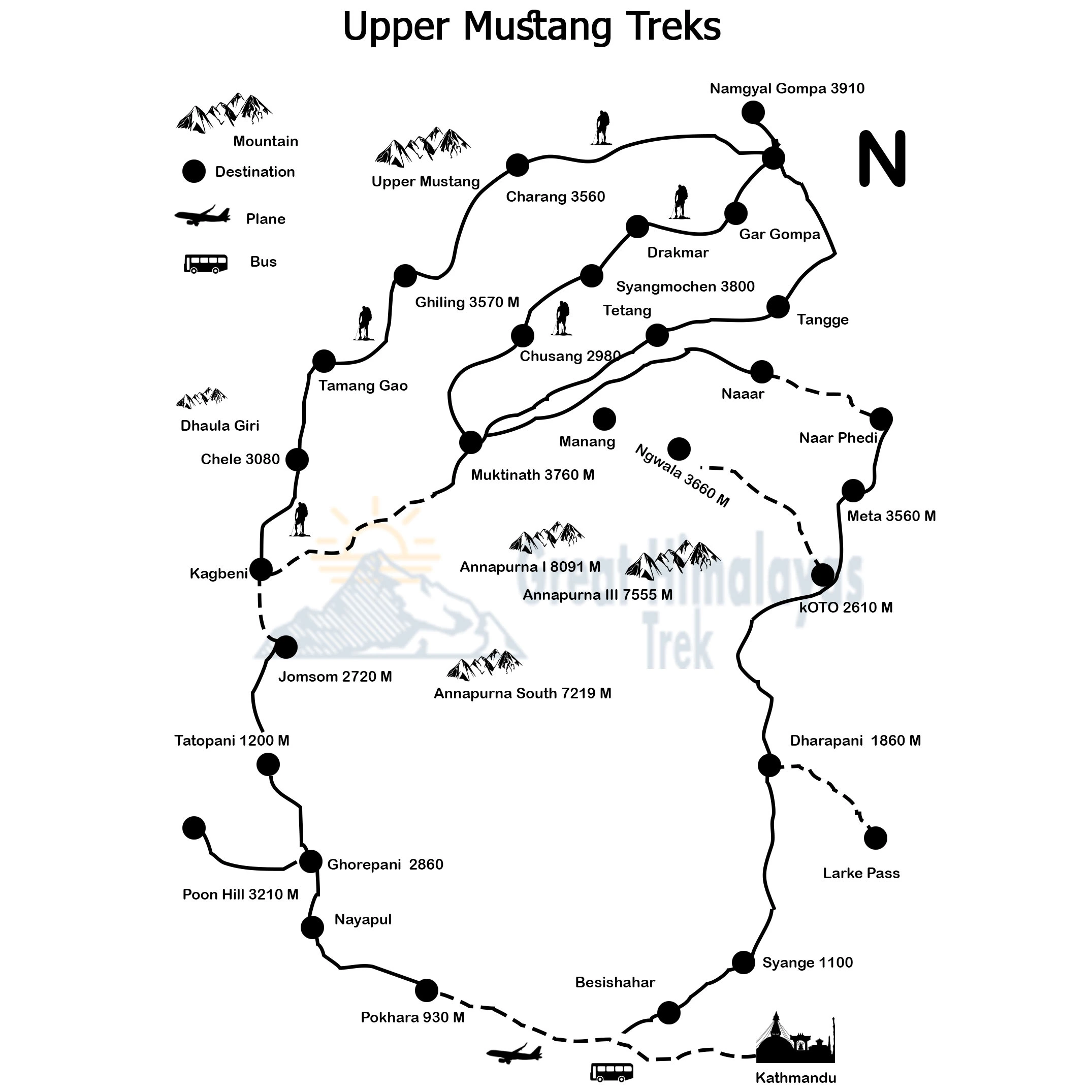
Route Map
 Gallery And Videos
Frequently Asked Question
Group Join Discount
| Nos Of Persons | price per person |
|---|
Upcoming Fixed Departure
| Trip Name | Departure Date | Price | Trip Status | Action |
|---|
UpComming Fixed Departure
Package Reviews And Rating
Write Reviews
Enquiry For Further Information

showing varified reviews