
- info@greathimalayastrek.com
- Kailash Manasarovar Departure Date 2025
 Quick Information
Overviews
The Annapurna Base Camp (ABC) trek
via Poon Hill is an extraordinary journey that combines the iconic Poon Hill
sunrise experience with the breathtaking trek to Annapurna Base Camp. Starting
from the foothills of the Annapurna range, this trek leads you through
rhododendron forests, terraced fields, and charming villages inhabited by the
Gurung and Magar communities. The rich cultural encounters and traditional
hospitality add depth to the trek, making it more than just a mountain
adventure.
The early morning hike to Poon Hill
is where you’ll witness a golden sunrise illuminating the mighty peaks of
Dhaulagiri, Annapurna South, Machapuchchhre, and other towering Himalayan
giants. This awe-inspiring panorama sets the tone for the days ahead as you
gradually make your way toward Annapurna Base Camp. The journey offers a
constant feast for the eyes, with changing landscapes ranging from subtropical
forests to alpine meadows and glacial moraines.
Reaching Annapurna Base Camp is a
truly rewarding experience. Surrounded by the towering Annapurna massif, including
Annapurna I, the trek offers a sense of being in the heart of the Himalayas.
The natural amphitheater of snow-capped peaks provides a stunning backdrop for
reflection and accomplishment. Combining adventure, culture, and scenic beauty,
the Annapurna Base Camp trek via Poon Hill is a perfect option for trekkers
seeking both physical challenge and incredible rewards.
Why Trek To Annapurna Base Camp?
Embarking on a journey to Annapurna Base Camp offers a captivating and rewarding adventure amidst the stunning Himalayas. This moderate-difficult trek in Nepal delivers breathtaking panoramas of snow-capped peaks, lush valleys, and a diverse range of flora and fauna. The experience also provides unique cultural interactions as you engage with the warm-hearted locals in charming villages along the route. Annapurna Base Camp's incredible vistas and challenging terrain make it an ideal choice for both seasoned hikers and enthusiastic beginners. Standing at the base camp, surrounded by towering mountains, creates a profound and humbling experience, making this expedition an unforgettable and soul-stirring adventure for trekkers worldwide.
Highlights
Poon Hill Sunrise: Witness a mesmerizing sunrise over the Annapurna
and Dhaulagiri ranges from Poon Hill (3,210 m/10,531 ft), with panoramic views
of snow-capped peaks bathed in golden light.
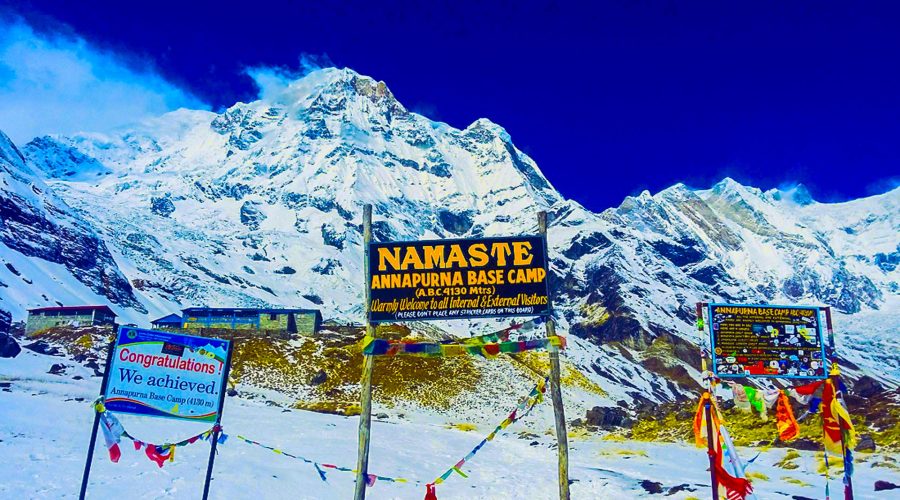
Annapurna Base Camp: Reach the heart of the Annapurna Sanctuary (4,130
m/13,550 ft), surrounded by towering peaks, including Annapurna I, Machapuchare
(Fishtail), and Hiunchuli, offering a sense of awe and accomplishment.
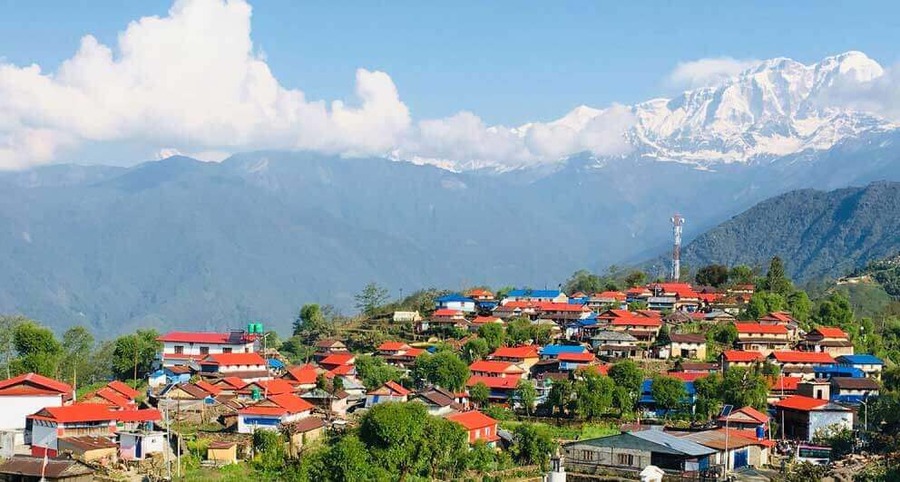
Gurung and Magar Villages: Experience the rich cultural heritage of
the local Gurung and Magar communities, exploring traditional villages like
Ghandruk and Chhomrong, known for their warm hospitality and unique mountain
lifestyles.
Diverse Landscapes: Trek through varied landscapes, from lush rhododendrons
and bamboo forests to alpine meadows and glacial moraines, showcasing the
region's natural beauty.
Hot Springs at Jhinu Danda: Relax in the natural hot springs of
Jhinu Danda, providing a refreshing break on the descent after days of
trekking, surrounded by the tranquil beauty of the mountains.
How to Trek Annapurna Base Camp?
Embarking on a challenging yet incredibly rewarding trek to Annapurna Base Camp requires careful planning and preparation. Here's a step-by-step guide to help you make the most of your experience:
Plan Your Trek: Decide on the trek's duration, the preferred time of year, and the route you'd like to take. Numerous trekking companies offer guided expeditions to Annapurna Base Camp, catering to various budgets and experience levels.
Obtain Permits: Before starting your trek, ensure you have the necessary permits. You'll need a trekking permit and a TIMS (Trekkers' Information Management System) card, which you can obtain from the Nepal Tourism Board in Kathmandu.
Pack Your Gear: Thoughtfully prepare your gear, including sturdy hiking boots, warm clothing, rain gear, sunscreen, a hat, and a well-equipped first-aid kit. Carry ample food and water supplies for the journey.
Acclimatize to the Altitude: Given that Annapurna Base Camp sits at an altitude of over 4,000 meters, acclimatization is crucial. Gradually ascend in altitude, starting your trek at a lower elevation.
Commence Your Trek: Embrace the challenge and rewards as you begin your Annapurna Base Camp trek. Savor the scenic beauty, immerse yourself in the local culture, and enjoy the adventure along the way.
To enhance your trekking experience, consider the following additional tips:
Start Early: Commencing your trek in the morning helps you avoid crowds and the midday heat.
Take Your Time: Savor the journey and avoid rushing. Enjoy the breathtaking scenery and unique cultural encounters along the way.
Respect the Environment: Preserve the fragile ecosystem of the Annapurna region by responsibly disposing of trash, refraining from littering, and minimizing your impact on the trails.
Stay Hydrated: Stay well-hydrated, especially at higher altitudes, by drinking plenty of water and avoiding alcohol and caffeine.
Listen to Your Body: Pay close attention to your body's signals and take breaks when needed to ensure a safe and enjoyable trekking experience.
By following these steps and tips, your Annapurna Base Camp trek will be an unforgettable adventure, marked by stunning vistas, cultural experiences, and personal achievements amidst the majestic Himalayas.
How can we make this more effective?
Our team of knowledgeable and experienced guides is dedicated to ensuring your safety and enriching your Everest Base Camp Trek experience. They possess in-depth knowledge of the region's terrain, weather conditions, and potential challenges, providing you with valuable insights and local stories throughout the journey.
To ensure a successful and safe trek, we meticulously plan the itinerary, incorporating appropriate acclimatization days. These vital rest days allow your body to adapt gradually to the increasing altitude, reducing the risk of altitude sickness. Our guides closely monitor your health and offer guidance on altitude sickness prevention, making necessary adjustments to the schedule if required.
Safety is our utmost priority during the trek, and we leave no room for compromises. Our team follows rigorous safety protocols, and our guides are trained to handle emergencies with efficiency and professionalism. We provide essential safety equipment, conduct thorough risk assessments, and maintain preparedness to respond to any unforeseen circumstances.
We understand the physical demands of trekking, which is why we provide skilled porters or yaks to carry your main luggage. This thoughtful service allows you to trek with a lighter daypack, enhancing your comfort and overall trekking experience.
Preparing for the Everest Base Camp Trek is essential, and our commitment to your journey begins well before you set foot on the trail. We offer detailed pre-trek information and assistance, guiding you to prepare physically and mentally for the challenges ahead, ensuring you embark on this extraordinary adventure with confidence and enthusiasm.
Best Season To Go Annapurna Base Camp Trek?
The best seasons for the Annapurna Base Camp (ABC) Trek are during the pre-monsoon season (spring) and the post-monsoon season (autumn). These two periods offer the most favorable weather conditions and ideal trekking experiences in the Annapurna region.
Pre-Monsoon Season (Spring) - February to April:
Spring, from February to April, is one of the most popular times for the ABC Trek.
The weather is relatively stable with clear skies, providing breathtaking views of the mountains and landscapes.
Rhododendron forests are in full bloom during this season, adding vibrant colors to the trekking trails.
Mild temperatures make for comfortable hiking conditions.
Post-Monsoon Season (Autumn) - September to November:
Autumn, from September to November, is another excellent time for the ABC Trek.
The monsoon rains will have cleared the trails, leaving them lush and vibrant.
The skies are generally clear, offering unobstructed views of the Himalayan peaks.
Mild temperatures and stable weather conditions create ideal trekking conditions.
Both of these seasons provide trekkers with the best opportunity to fully immerse themselves in the breathtaking landscapes of the Annapurna region. Additionally, the stable weather during these periods reduces the likelihood of flight cancellations or disruptions due to adverse weather conditions, ensuring a smoother and more enjoyable trek.
While the pre-monsoon and post-monsoon seasons are the most popular choices, some trekkers also embark on the ABC Trek during the autumn season (December to January). However, winter trekking in this region can be significantly colder, with the possibility of snow on the trails. It's essential to be well-prepared for sub-zero temperatures and challenging weather conditions if you choose to trek during the winter months.
In conclusion, selecting the optimal season for your Annapurna Base Camp Trek is paramount to ensuring a comfortable and immensely rewarding experience. Two standout periods emerge as the most favorable: the pre-monsoon, spanning from spring into early summer (February to April), and the post-monsoon, gracing the autumn months (September to November). These two distinct seasons converge to provide trekkers with an exquisite blend of favorable weather conditions, unhindered vistas, and a thriving, lush landscape that encapsulates the Annapurna region's natural splendor.
During the pre-monsoon season, from February to April, the trekking trails come to life with a burst of colors, courtesy of the vibrant rhododendron blooms. The weather boasts remarkable stability, with crisp, clear skies unveiling the breathtaking grandeur of the surrounding mountains and landscapes. As trekkers traverse the terrain, the mild temperatures during this period ensure a pleasant and comfortable hiking experience.
On the other hand, the post-monsoon season, spanning from September to November, bestows trekkers with a landscape rejuvenated by the monsoon rains. The trails are clothed in lush greenery, offering a striking contrast to the towering snow-capped peaks. The skies remain clear and unobstructed, providing uninterrupted views of the majestic Himalayan range. Mild temperatures during the autumn months create an ideal environment for trekking enthusiasts to embark on this awe-inspiring journey.
In these two exceptional seasons, nature and culture converge harmoniously, allowing trekkers to immerse themselves fully in the rich tapestry of the Annapurna region. Clear skies not only reveal the magnificent mountains but also pave the way for unforgettable sunrises and sunsets. The trails, adorned with blooming rhododendrons in spring or lush vegetation in autumn, beckon explorers to embrace the sheer beauty that surrounds them.
In essence, for a trek that combines the utmost comfort with the most rewarding experiences, we wholeheartedly recommend planning your Annapurna Base Camp adventure during the pre-monsoon (spring) or post-monsoon (autumn) seasons. These carefully chosen timeframes ensure that you can relish the region's natural splendor to the fullest, while the mild weather and clear skies set the stage for a memorable and culturally enriching journey in the heart of the Himalayas.
Cost Include
Cost Exclude
Itenerary
Upon your arrival at Tribhuvan International Airport (1,340 m/4,396 ft) in Kathmandu, you will be warmly welcomed by our support team. They will assist you with your luggage and transfer you to your hotel in the heart of the city. Once you check in, take some time to rest and recover from your journey. At the hotel, you will be briefed about your trek and daily activities. If you’re up for it, you can start exploring the lively streets of Thamel, known for its bustling markets, shops, and restaurants. Enjoy a relaxing evening at your hotel, preparing for the exciting days ahead.
After a hearty breakfast at your hotel, embark on a guided sightseeing tour of Kathmandu. Your first stop is Swayambhunath Stupa (Monkey Temple), perched on a hilltop offering panoramic views of the city. Next, visit Pashupatinath Temple, a sacred Hindu site on the banks of the Bagmati River, where you might witness traditional cremation rituals. Afterward, head to Boudhanath Stupa, one of Nepal’s largest and most significant Buddhist stupas, surrounded by monasteries and vibrant Tibetan culture. After lunch at a local restaurant, continue to Patan Durbar Square, renowned for its exquisite Newari architecture and historic temples. Return to your hotel in the evening, where you can relax or explore Thamel further if you wish.
The drive from Kathmandu to Pokhara is a journey through Nepal’s natural beauty. Leaving behind the busy streets of Kathmandu, the road climbs gently through green hills and terraced farmlands. As you descend from Nagdhunga, panoramic views open up, and on clear days, distant snow-capped mountain ranges shimmer on the horizon. The highway winds along the Trishuli River, passing shaded forests, deep valleys, and cascading waterfalls. Near Mugling, the landscape softens as the Trishuli and Marshyangdi rivers meet. Crossing the Trishuli River, the road follows the Marshyangdi, flanked by terraced fields, toward Dumre. From Dumre, the route leaves the river, and rolling hills lead you to the towering peaks of the Annapurna range. Finally, as you near Pokhara, the peaks of the Annapurna range and the iconic Machhapuchhre come into view, standing tall against the clear blue sky. The road weaves through this tranquil landscape, leading you to the serene shores of Phewa Lake, where the reflection of the mountains dances on the water’s surface, welcoming you to the city.
A scenic 3-hour drive from Pokhara takes you to Birethanti (1,025 m/3,363 ft), the starting point of your trek. Upon arrival, cross the bridge over the Modi Khola. From there, a short climb through the narrow lanes leads you up to a road just above the village. After Birethanti, the trail offers an easy and gradual uphill walk toward Tikhedhunga. The path winds along the Bhurungdi Khola, passing through charming villages and terraced farm fields. The journey is quite picturesque, with friendly locals often greeting you with warm smiles. You’ll traverse through Lamdawali (1,160 m/3,806 ft), Sudame (1,340 m/4,396 ft), and Hille (1,430 m/4,692 ft), finally reaching Tikhedhunga (1,540 m/5052 ft).
Today the Poon Hill trek is a little demanding, starting with a tough staircase up, to over 3,000 steps. The trail steepens significantly as you tackle well-made stone steps. This challenging ascent will lead you to the Magar village of Ulleri (1,960 m/6,430 ft). Ulleri offers comfortable teahouses and stunning views of Annapurna South and Hiun Chuli. From Ulleri, the trail continues its climb, moving from the cultivated areas of the Bhurungdi Khola into oak and rhododendron forests. Then, you’ll reach Ban Thanti (2,210 m/7,251 ft), followed by Nangge Thanti (aka Naya Thanti, 2,430 m/7,972 ft). Both of these spots have good teahouses and serve as ideal rest stops. Another hour of climbing along the same track will bring you to Ghorepani (2,860 m/9,383 ft), a larger village with a police checkpost at its entrance. This place offers the best views of the Annapurna range, which dominates the skyline. To the west, you’ll see the massive bulk of Dhaulagiri and the mysterious depths of the Kali Gandaki Gorge.
Today you’ll climb to the top of Poon Hill (3,210 m/10,531 ft). The focus shifts to witnessing the stunning sunrise from the summit. Many trekkers rise early to catch the breathtaking sunrise. The day begins with an early wake-up, as trekkers make their way to the top in the dark. The trail is illuminated by the headlamps of fellow hikers, guiding the way. A viewing tower stands at the summit. The panorama from Poon Hill offers one of the classic Himalayan views, showcasing the stunning peaks. The summit of Poon Hill can be reached in just over an hour. Mount Dhaulagiri (8,167 m/26,795 ft), Mount Manaslu (8,163 m/26,781 ft), Mount Annapurna II (7,937 m/26,040 ft), and Machapuchare (6,993 m/22,943 ft) dominate the skyline, along with other towering peaks over 6,000 meters. This sweeping vista confirms why the trek is known as the Annapurna Panorama. The sunrise marks a perfect moment with such a grand backdrop. After the sunrise view, you’ll return to Ghorepani for breakfast. Then continue your trek toward Tadapani. The incredible views continue as the trail follows the mountain ridge during the trek from Ghorepani to Tadapani. From the center of Ghorepani, you’ll take the main trail heading east. This path remains high along a forested ridge, offering splendid views of Machhapuchhare, Annapurna, and Hiun Chuli. After over an hour’s trek, the trail reaches a small pass with teashops. From there, the trail descends steeply through rhododendron forests draped in Spanish moss, crossing a stream before climbing to a deserted quarry. The path then traverses to Liui Kharka, a small hamlet, before continuing onto a broad hillside above the Kimrong Khola and arriving at the charming village of Tadapani (2,630 m/8,629 ft).
Today’s trek continues through the enchanting Annapurna region, offering a mix of ascents and descents that showcase the area's natural beauty and cultural charm. As you depart from Tadapani, you’ll find yourself trekking through dense forests adorned with endless rhododendron trees. The path is a blend of marvelous scenery, pristine streams, traditional villages, and views of the towering Himalayas. The trek begins with a long descent through the lush rhododendron forest, moving past cultivation fields and enjoying the panoramic views of green hills and valleys interwoven with streams. You’ll pass through Chui Le, a typical hilly village reflecting the rural lifestyle of Nepal, before reaching the Kimrong River. Upon crossing the Kimrong River via a suspension bridge, the trail shifts to an uphill climb. You’ll ascend to the western bank of the Modi River, passing through the settlement of Taulung. Here, you’ll encounter the junction where the trails to Jhinu Danda and Annapurna Base Camp converge. Continuing, you’ll undertake the final climb to Chhomrong, which involves a long staircase of stone. As you climb, the lush scenery and hills provide a picturesque backdrop. Chhomrong, with its stunning views and tranquil atmosphere, will be your destination for the day. Rest and overnight in Chhomrong.
The trek today and tomorrow offers a more manageable pace compared to the previous day’s exertions, allowing trekkers to acclimatize to the increasing altitude comfortably. Starting with a descent to the Chhomrong River, you’ll cross over and then hike towards the small settlements of Tilche and Dalphuon, which sit on either side of the Modi River. As you continue along the trail, you’ll encounter a series of undulating paths that ascend gradually as you move closer to the river. The route passes through several villages, including Sinuwa and Khuldigar, before reaching Bamboo Village. The climb to Sinuwa via Sinuwa Danda is notably strenuous, with a series of stone steps. However, the effort is rewarded with spectacular views of snow-capped mountains, deep gorges, and lush hills. The scenery here provides a striking contrast to the dense forest that begins to dominate the landscape as you enter the Upper Modi Khola Valley. After passing Kuldi, the trail becomes slippery and more challenging, winding through dense forested areas. The journey through the forested landscape culminates at Bamboo (2,310 m/7,579 ft), where you’ll spend the night.
Today’s trek is the shortest of the entire journey, designed to help trekkers acclimate to the altitude before reaching the Annapurna Base Camp. The trail is marked by gradual ascents through forests of bamboo, oak, and rhododendron, with the Modi River accompanying you along the way. Your first stop is Dovan, where you’ll cross a small stream and continue your trek past the Himalayan Hotel and a waterfall. As you move forward, you’ll pass by the Hinku Cave, a site of religious significance for the locals. The path then leads you to Deurali, your stopping point for the night. This area, situated before and slightly beyond Deurali, is known for its avalanche-prone conditions, so trekkers should exercise caution. The convergence of the Machhapuchhre River with the Modi River adds to the scenic beauty of the route. You’ll use this opportunity to acclimate to the altitude and prepare yourself for the ascent to the Annapurna Base Camp the following day. Overnight stay in Deurali will ensure you are well-rested and ready for the adventure ahead.
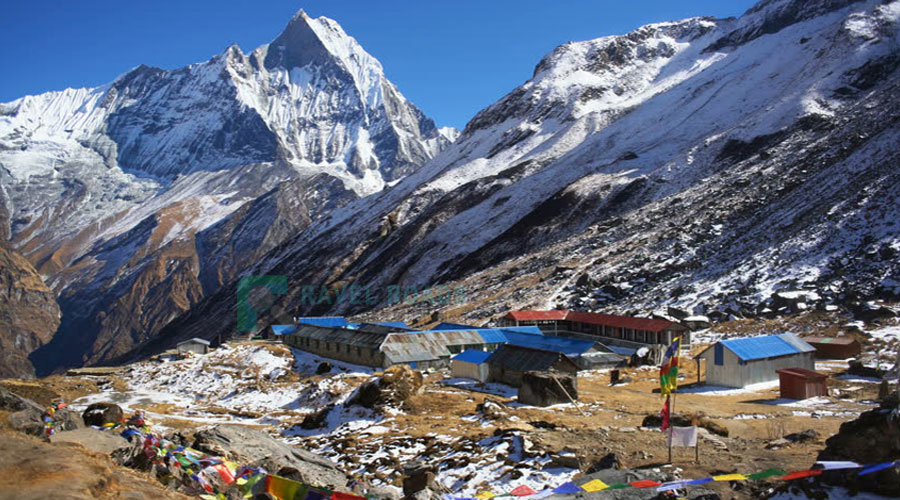
Today you’ll journey to the Annapurna Base Camp, passing through the base camp of the Machhapuchchhre Mountain. After leaving Deurali, you’ll follow the trail to Bagar, where the Modi River meets the Machhapuchchhre River. As you advance, the lush vegetation gives way to a rugged landscape dominated by boulders, rocky paths, glacial rivers, lakes, and waterfalls. The trail gradually veers away from the river and approaches the base of Machhapuchchhre Mountain, also known as Fishtail Mountain. While climbing this mountain is prohibited, its base camp serves as a crucial waypoint for trekkers heading to Annapurna Base Camp. From here, you can enjoy stunning views of the Annapurna Mountain range, Gaganpurna, Hiun Chuli, and the majestic Machhapuchchhre, along with several other peaks. After taking in the breathtaking scenery and resting, you’ll continue your trek by crossing a glacial river and turning right along the gorge formed between the Annapurna South Glacier’s lateral moraines and the avalanche-prone ridges. The Annapurna Base Camp awaits, offering panoramic views of towering snow-capped peaks, glaciers, crevasses, and moraines. This area presents an awe-inspiring sight with its massive, snow-clad rocks and dramatic mountain landscapes. Explore the surroundings and prepare to witness one of the most spectacular sunsets of the trek. Overnight stay at Annapurna Base Camp will provide a memorable experience amidst the grandeur of the Himalayas.
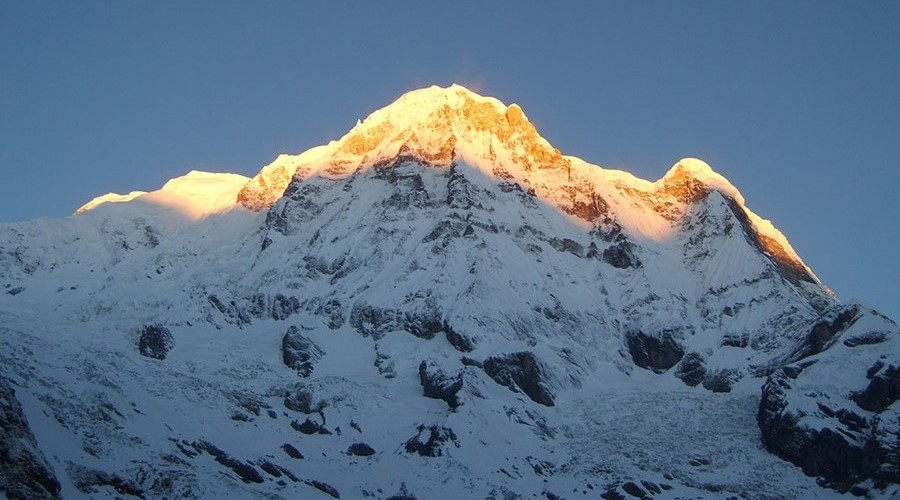
Today, you’ll experience one of the most breathtaking sunrises in the Himalayas. At Annapurna Base Camp, wake up early to witness the first light of day illuminating the Annapurna massifs and other towering peaks. This awe-inspiring moment is where nature’s beauty is revealed in full splendor. After soaking in the magnificent sunrise and capturing these unforgettable scenes, you begin your descent from the high-altitude base camp. Trekking downhill is less strenuous than ascending, and you’ll make your way back to the settlement of Bamboo. As you leave the avalanche-prone regions and head towards the valley formed by the Modi River, you’ll follow the same trail you traversed on your way up. The diverse and enchanting landscape, along with the natural beauty of the area, continues to captivate travelers. Although the descent is easier on the body compared to climbing up, it’s important to move cautiously to avoid straining the legs and ankles. The familiar scenery and tranquil surroundings will provide a comforting backdrop for your journey back. You’ll spend the night in Bamboo Village, reflecting on the incredible experiences of the past days.
Today’s trek leads you to Jhinu Danda, renowned for its natural hot water springs. You’ll set off with the goal of reaching this rejuvenating destination, navigating through a diverse and picturesque landscape. The trail involves some steep sections, with rocky terrain and stone steps as you traverse the path. You’ll cross several bridges and pass through the village of Taulung before continuing your descent towards Jhinu Danda (1,760 m/5,774 ft). The trek is characterized by its gradual decline, allowing you to gradually ease your way down. Upon arriving at Jhinu Danda, take advantage of the natural hot springs. These springs, believed to have therapeutic properties, offer a soothing soak to relax tired muscles and rejuvenate after strenuous higher-altitude trekking. The healing waters are said to help with various ailments, including skin conditions and body aches. After a relaxing dip, settle into your guesthouse for a well-deserved overnight stay. Enjoy the serene environment and the comforting warmth of the springs as you reflect on the trek’s memorable experiences.
Today marks the final day of your trekking adventure in the Annapurna region. You’ll set out on a hike from Jhinu Danda to Nayapul, a journey that will be relatively easier compared to the previous days. It’s essential to proceed gradually to minimize strain on the ankles and legs, which have been under considerable stress during the trek. As you walk, you’ll pass through culturally rich villages inhabited by diverse communities, each contributing to the region’s vibrant variety. The trail is lined with a variety of natural scenery, including fast-flowing streams, picturesque waterfalls, lush valleys, and rolling hills. These elements combine to create a tranquil and visually captivating environment as we make our way to Nayapul. Upon reaching Nayapul, take a moment to refresh and prepare your belongings for the journey ahead. You’ll then drive back to Pokhara. Once in Pokhara, you have the option to explore the bustling Lakeside area in the evening, enjoying the lively atmosphere and scenic beauty of the lake. Stay overnight in Pokhara, where you can unwind and reflect on the incredible trek you’ve just completed. If road construction from Jhinu Danda to Nayapul is complete, driving directly from Jhinu Danda to Pokhara could be an alternative option.
Today at Pokhara, Nepal’s picturesque lakeside city, you will set out on a sightseeing tour to explore its most famous landmarks. Start with a visit to Devi’s Fall (Patale Chhango), a unique waterfall that flows into a deep, mysterious underground tunnel. Nearby is the Gupteshwor Cave, a sacred site with an intricate network of caves where you can also see the underground view of Devi’s Fall (Patale Chhango). Next, head to the Seti Gorge, where the river runs deep beneath the city in narrow gorges. This natural wonder showcases the power of water erosion over centuries. You will also visit the Bindhabasini Temple, a historic Hindu temple dedicated to the goddess Durga, which is located on a hilltop offering panoramic views of Pokhara and the surrounding peaks. After sightseeing activity, you’ll take a flight back to Kathmandu (1,340 m/4,396 ft), lasting around 25 to 30 minutes. During this short but scenic journey, enjoy captivating views of some of Nepal’s most iconic mountains, including Annapurna, Machhapuchhre (Fishtail), and Manaslu, as well as the stunning landscape below. Upon arrival in Kathmandu, you’ll be transferred to your hotel. If time allows, you can spend the day exploring more of the vibrant capital city or relaxing.
Our team will accompany you to the airport for your journey back home. If you wish to extend your stay, there are plenty of exciting options like jungle safaris, white-water rafting, a tour of Tibet (Mount Kailash), or even mountain biking adventures. Feel free to ask us for details!
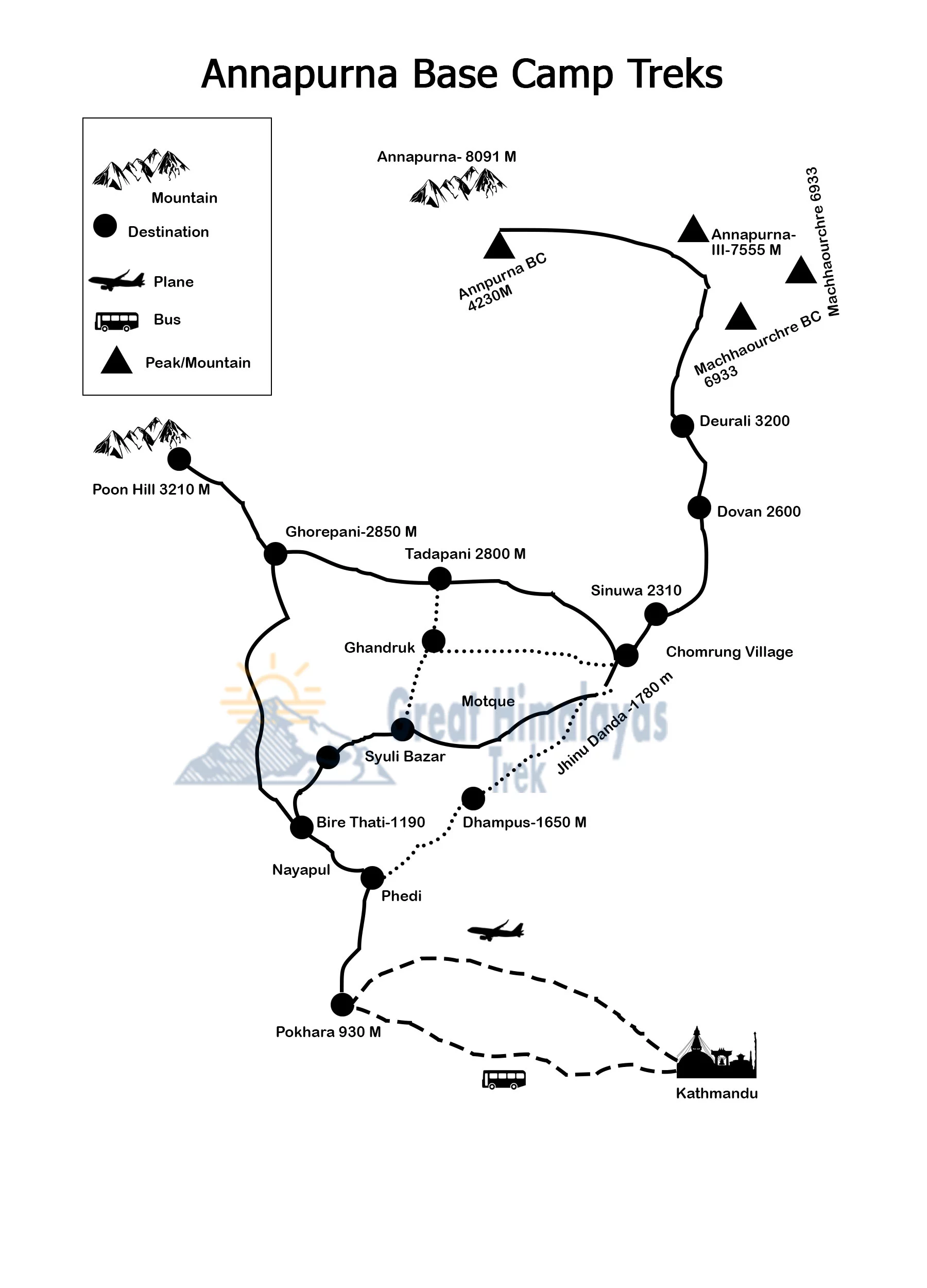
Route Map
 Gallery And Videos
Frequently Asked Question
Group Join Discount
| Nos Of Persons | price per person |
|---|
Upcoming Fixed Departure
| Trip Name | Departure Date | Price | Trip Status | Action |
|---|
UpComming Fixed Departure
Package Reviews And Rating
Write Reviews
Enquiry For Further Information

showing varified reviews
Best service provide in this company, last week I had travelled from there. Please contact in this company feel free.